Gold fineness: how to choose a bracelet metal and understand fineness
Why is it important to know the bracelet’s metal?
When choosing a bracelet, it is important to consider not only its design or length, but also the metal it is made of. Understanding the gold you choose is important for its properties and quality. Different precious metals have different characteristics: pure gold is a soft metal, so it is often mixed with other metals to make it more resistant to wear, while other metals can be naturally harder. A properly chosen precious metal alloy guarantees durability, comfort and aesthetics.
What is bracelet fineness and how to understand it?
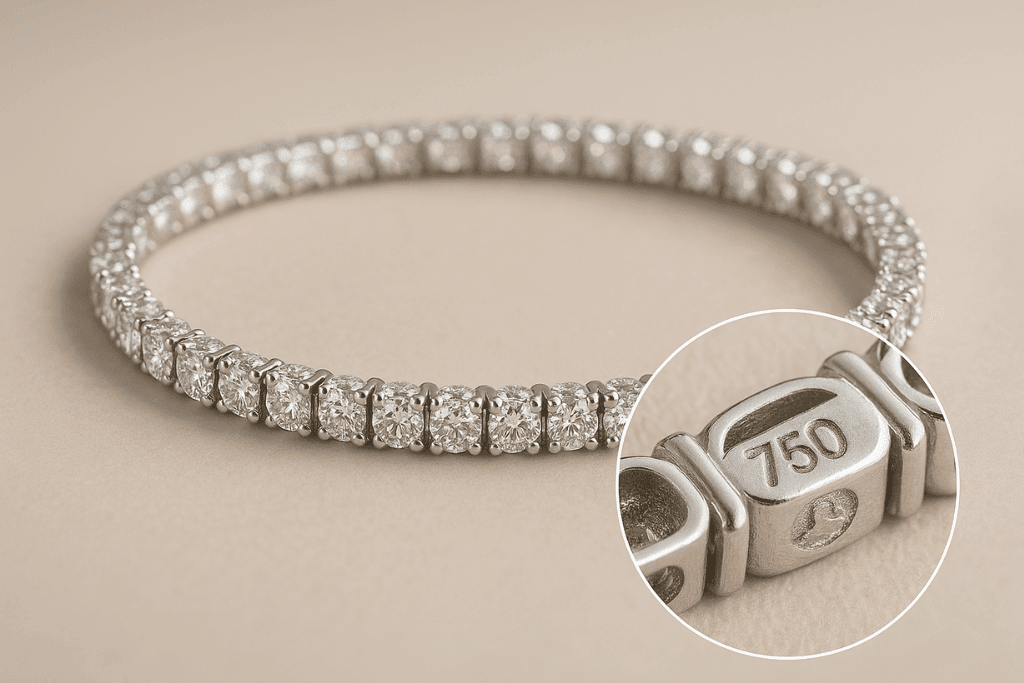
Fineness indicates how much pure gold or other precious metal is in the alloy from which the jewellery piece is made. Fineness and its number are usually indicated by a thousandth system, for example, 585 means that the alloy contains 58.5% gold, and the rest consists of other metals, such as silver, copper, palladium or nickel. The higher the fineness number, the more pure gold is in the alloy. The fineness number indicates a specific amount of gold in the alloy.
What gold finenesses are most commonly used in bracelets?
The most commonly used gold finenesses for bracelets are: 375, 585, 750 and 999 – these are the main finenesses that determine gold purity and properties.
- 375 gold (9 carats): this is a more economical option where gold accounts for only 37.5% of the total alloy mass. An alloy of this fineness would be softer and less resistant than higher finenesses, so such bracelets may be less resistant to wear.
- 585 gold (14 carats): this is a gold alloy in which the ratio of gold and other metals is optimally balanced. Such jewellery pieces are durable, retain their colour and are perfect for everyday wear. 999 gold indicates almost pure gold, which is mostly used for investment bars or exceptionally high-quality jewellery pieces.

Gold colour: yellow, white or rose?
Gold colour depends on what metals and precious metals were used in the alloy.
- Yellow gold – this is a classic, mostly used in traditional jewellery designs. This alloy usually contains silver and copper metals.
- White and white gold shade is achieved by adding palladium or nickel metals. Such items are often plated with rhodium to keep them shiny and highlight the white colour. In addition, the surface of white gold is often plated with a precious metal such as rhodium, which provides exceptional shine and durability.
- Rose gold is obtained when copper metal predominates in the alloy; the more copper in the alloy, the more intense the rose shade. It looks exceptional, warm and romantic.
All these colours can have the same gold fineness, so it is a choice of aesthetics rather than quality.
Platinum – a refined choice for bracelets
Platinum – this is one of the most expensive and durable precious metals. It is naturally white, requiring no additional plating. Because platinum is hypoallergenic, it is perfectly suited for people with sensitive skin. Platinum bracelets are mostly made using metal that is almost 95% pure.

Fineness and bracelet durability
When choosing a bracelet, it is important to understand that a higher fineness does not necessarily mean better endurance. For example, a 585 gold bracelet will be more durable than a 750 one, because it contains more other metals that provide strength. Therefore, the fineness should be chosen taking into account how often and under what conditions the bracelet will be worn.
What does the hallmark on a bracelet mean?
All jewellery pieces made of precious metals and their alloys must be marked with a hallmark, which is stamped on the item and indicates what amount in the alloy is pure gold or another precious metal. This mark confirms the authenticity and quality of the item. In Lithuania, this is controlled by the Hallmarking of the Republic of Lithuania institutions, in accordance with the law on the State Supervision of Precious Metals and Gemstones of the Republic of Lithuania. Currently, there are certain marking requirements in force in Lithuania that must be met. Before buying a jewellery piece, these marks should be carefully checked.
Does the colour depend on the fineness?
Fineness is not the factor that determines the colour. As already mentioned, rose gold, white gold and yellow gold can have the same gold fineness, but a different composition and appearance. The difference arises due to what metals are used in the alloy.
It is important to mention that modern technologies allow obtaining various gold colours regardless of the fineness.
What to choose for everyday wear?
The most suitable bracelets for everyday use are made of 585 gold or platinum. They are durable, resistant to environmental effects, do not fade and do not cause skin irritation. 375 gold bracelets can also be suitable, but they need to be worn more carefully, especially if the lifestyle is active.
For everyday wear, it is recommended to choose durable and reliable jewellery piece variants.
What to choose for special occasions?
When looking for a luxurious gift or a jewellery piece for a special occasion, you can choose higher gold fineness or platinum bracelets. Such bracelets often feature higher prices due to their quality and exclusivity. Such item choices look exceptionally refined and convey exclusivity.
How to care for gold and platinum bracelets?
In order for a gold or platinum bracelet to remain shining and unchanged, you should avoid aggressive chemicals, keep it away from moisture and store it in a clean box. White gold, especially if it is rhodium-plated, may require additional renewal over time.
Why is it worth investing in higher fineness jewellery pieces?
Although investing in higher fineness items can offer greater long-term value, they cost more. This is especially relevant for those who are looking not only for an accessory, but also for an investment or a family heirloom.


When choosing a bracelet, it is necessary to evaluate not only the design, but also the metal type, gold fineness, wearing habits and skin sensitivity. A properly chosen alloy composition will guarantee that the bracelet will delight you for many years, will not lose its appearance and will remain a reliable jewellery piece.