Diamonds are a symbol of luxury and exclusivity
Diamonds attract attention with their unique brilliance and exceptional beauty. It is no coincidence that diamonds fascinate not only with their appearance, but also with the rich history and symbolism they have acquired over the centuries. Every diamond is a natural mineral formed over millions of years under immense pressure and high temperature. The diamonds for sale with international GIA, HRD, IGI certificates confirm their authenticity and gemstone quality – the diamonds we offer are certified and meet the highest quality standards. The price of every diamond depends on individual parameters: carat weight, colour, clarity and cut, so when assessing its value, it is important to carefully evaluate each of these characteristics.
About diamonds
A diamond is the hardest natural mineral found in the world, with a history spanning thousands of years. This gemstone forms deep within the earth’s depths under tremendous pressure and high temperature. Each diamond is unique because its facets and shapes differ. Diamonds are valued for their unparalleled beauty and value, which depends on colour, clarity, weight and shape. Natural diamonds are extremely rare, so their value can increase by up to 400% per year. In addition, synthetic diamonds can also be found on the market, which are less expensive but also have their own value.
What is the difference between a diamond and a brilliant-cut diamond?
All brilliant-cut diamonds are diamonds, but not all diamonds are brilliant-cut diamonds. A brilliant-cut diamond is a processed diamond with 57 or 58 facets that ensure maximum brilliance. The terms “diamond or brilliant-cut diamond” are often used as synonyms, but technically a brilliant-cut diamond is a specific diamond shape. When choosing a “diamond or brilliant-cut diamond”, it is important to know that the price of a brilliant-cut diamond can be slightly higher due to additional processing. Furthermore, when choosing brilliant-cut diamonds, it is essential to consider quality characteristics such as clarity and colour, as this determines both aesthetic pleasure and investment value.
Diamond types
Diamond types differ by shape, cut, clarity, colour and weight. Each diamond is unique, and their shapes can be various: Round, Princess, Emerald, etc. Diamonds can be red, blue, white, or yellow in colour, and “fancy coloured” diamonds are especially rare and valuable due to complex production. A perfectly faceted diamond will be significantly more expressive and the brilliance will be greater than that of a crooked stone. Therefore, it is important to choose diamonds according to strict geometric rules to ensure maximum beauty and value.
The 4Cs of diamonds: colour, clarity, carat and cut
The diamond carat price is directly related to the diamond’s weight: the price of a 1 carat diamond is higher than the price of two 0.5 ct stones, even though the total weight is the same. Colour is graded with letters from D (colourless)–Z (with colour impurities). Clarity indicates inclusions and blemishes, graded from IF (internally flawless) to I3 (severe inclusions). The cut quality determines how the diamond reflects light.
Diamond price and budget planning
Depending on the criteria mentioned above, diamond prices range from a few hundred euros to tens of thousands for the price of a 1 ct brilliant-cut diamond. When choosing investment diamonds, it is recommended to allocate at least 3–5% of your budget to the jewellery piece. The price of a 1 carat diamond usually starts from ~3 000–4 000 EUR for a colourless, VS1 quality stone. It is important to form a budget in advance and consult with certified specialists to take into account various aspects and needs.
Brilliant-cut diamond price and investment diamond
The price of brilliant-cut diamonds is usually slightly higher than that of natural, rough diamonds, because the shape of a brilliant-cut diamond requires precise cutting. Investment diamonds are of exceptional quality, larger than 0.5 ct, with high-quality GIA or HRD certificates. It is important that diamonds are certified, as this confirms their authenticity and quality characteristics. An investment diamond is based on a clear market: the demand for the most valuable gemstones is constantly growing. Therefore, an investment in a brilliant-cut diamond often yields a return over time.
1 ct brilliant-cut diamond price and investment opportunities
The price of a 1 ct brilliant-cut diamond, depending on colour and clarity, can reach 5 000–15 000 EUR or more. Investment diamonds of this size are valued for their universal recognition and liquidity – they are easy to sell or pass down from generation to generation. If you are considering the “1 carat diamond price” as an investment, it is recommended to contact an experienced jeweller or an authorised international laboratory.
Diamond prices: how they change in the market
Diamond prices constantly fluctuate depending on the discovery of new deposits, political factors and demand. In recent years, the gemstone market has been changed by the supply of both natural and lab-grown diamonds, which includes diamonds of various sizes, parameters and shapes. Although lab-grown diamonds cost almost half as much, natural diamonds remain the investment favourite due to their rarity.
Investment in diamonds: what to choose?
Investment diamonds must meet the strictest criteria: colour D–F, clarity from VVS1, carat weight ≥1 ct, and Excellent or Very Good cut. The supply of such diamonds accounts for just a few percent of all diamonds in the market. They have a clear liquidity perspective, so investing in these gemstones can be safer than high-value artworks.
Diamond certificates: GIA, HRD and IGI
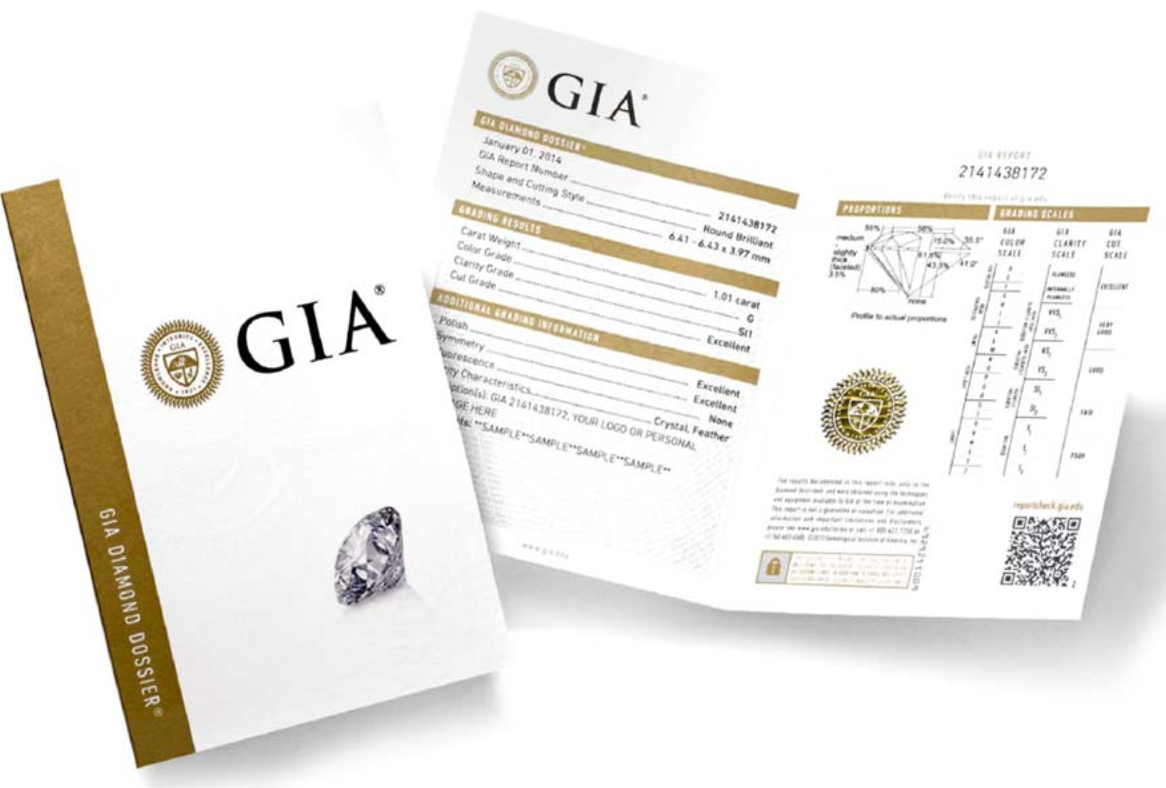
When choosing any brilliant-cut diamond or diamond, make sure that the jewellery piece has a reliable certificate. GIA (USA), HRD (Belgium) and IGI (Belgium) documents provide a detailed description: weight, colour, clarity, cut and proportions. The certificate ensures that the “diamond price” matches the actual quality of the stone. In Lithuania, mandatory registration of gemstones applies at the Assay Office. It is important to pay attention to the authenticity of the certificate, as reliable certificates act as a protective “buffer” between the consumer and possible counterfeits.
Shapes and designs: Round, Princess, Emerald, etc.
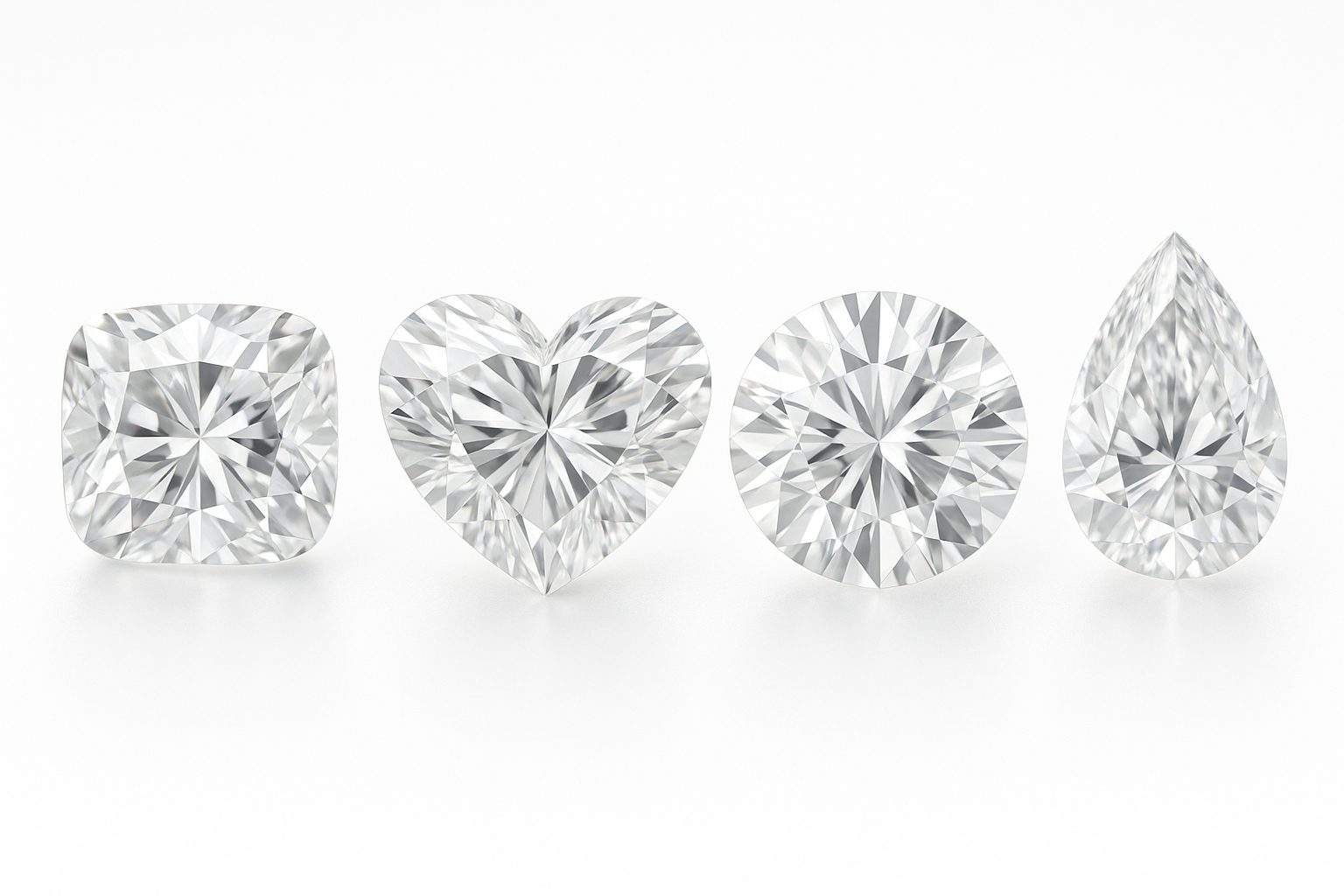
Diamond shapes (cut) affect the brilliance and style: Round (Round Brilliant) – tradition and maximum sparkle, Princess shape – modern angularity, Emerald shape – elegant step cut. Each diamond is unique, and the shape is chosen depending on the client’s preferences and budget.
Round diamond shape, Eng. Round Brilliant
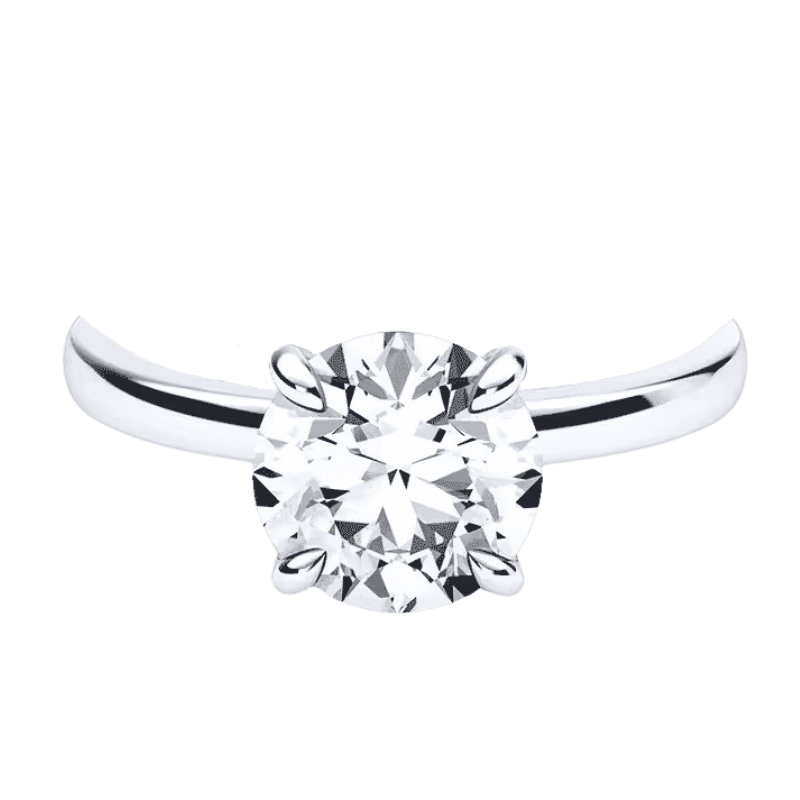
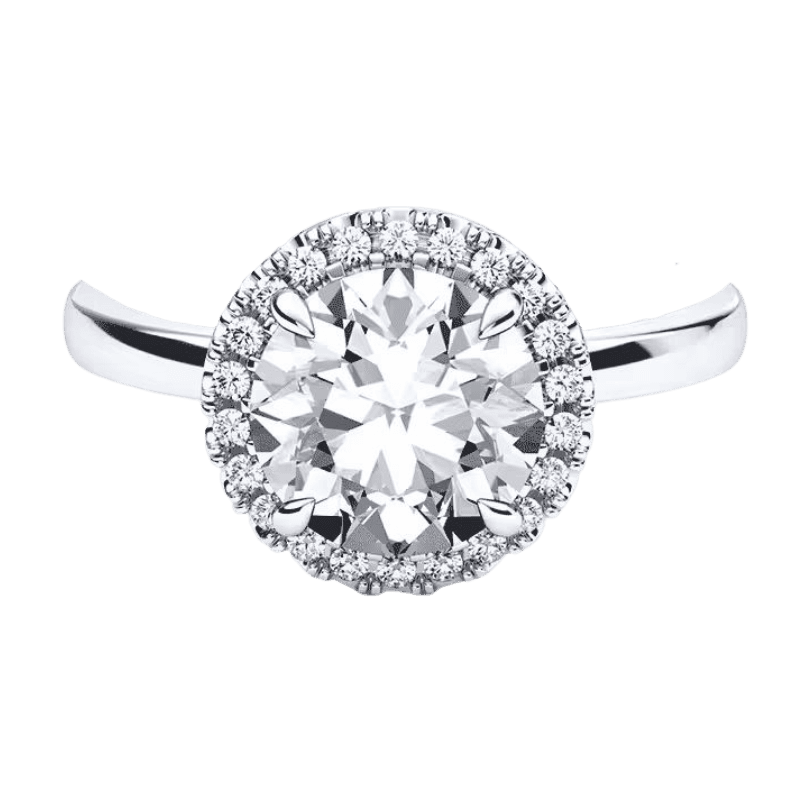
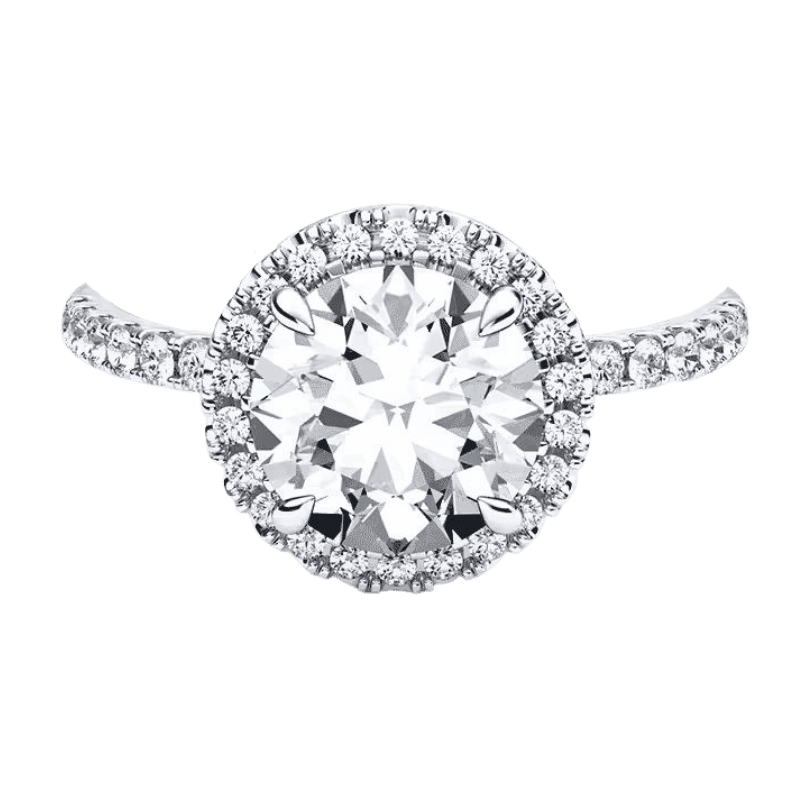
The Round diamond is the most popular and adaptable diamond shape in the world. Its 57 (or 58) facets are designed to reflect light to the maximum and create intense brilliance. Due to its symmetrical circular shape, the Round diamond goes perfectly with rings, earrings or pendants of various styles. Although the price of a Round brilliant-cut diamond is often higher than other shapes, its versatility and optical excellence often justify the investment.
Princess, square diamond shape, Eng. Princess
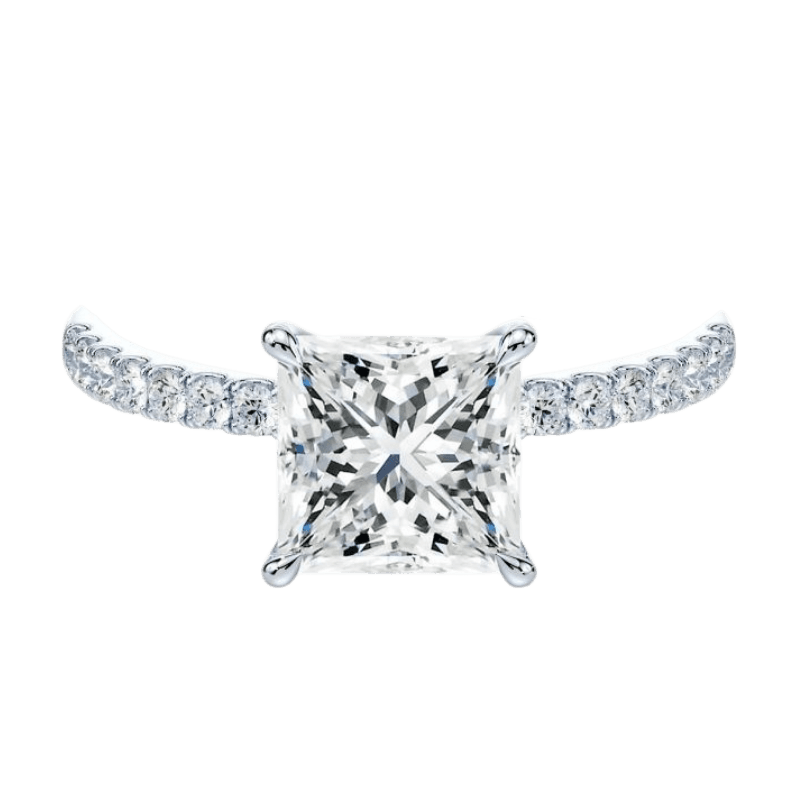
The Princess shape is the second most popular after the Round brilliant-cut diamond. It has a square or rectangular outline with sharp corners, giving the diamond a modern, geometric look. The cutting of Princess diamonds retains a considerable amount of weight, so a 1 carat Princess diamond often costs less than its Round counterpart. Stones of this shape are especially favoured in minimalist rings, where they emit a bright sparkle.
Emerald, rectangular diamond shape, Eng. Emerald Cut
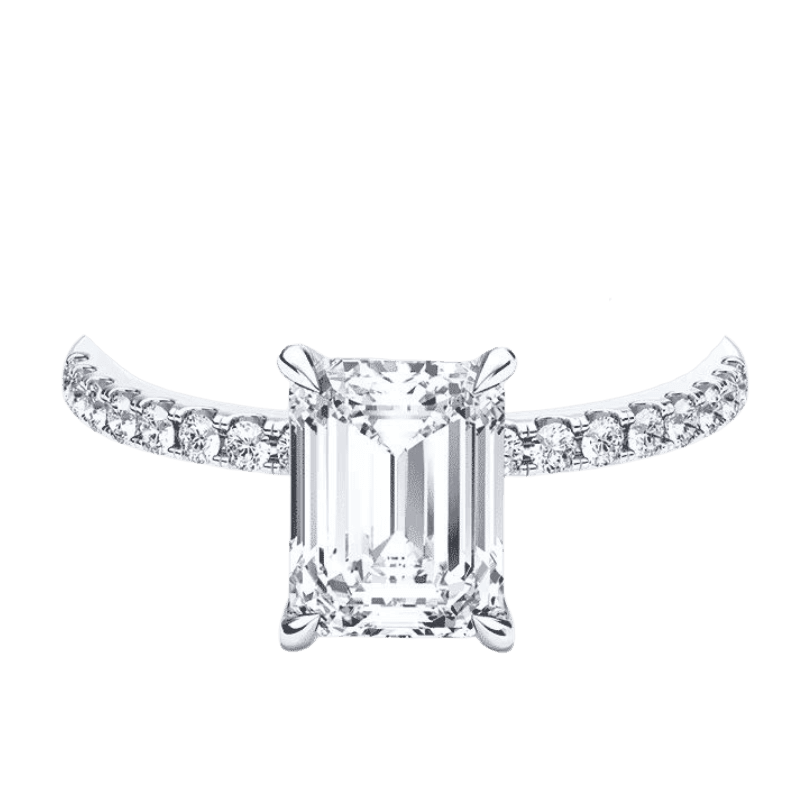
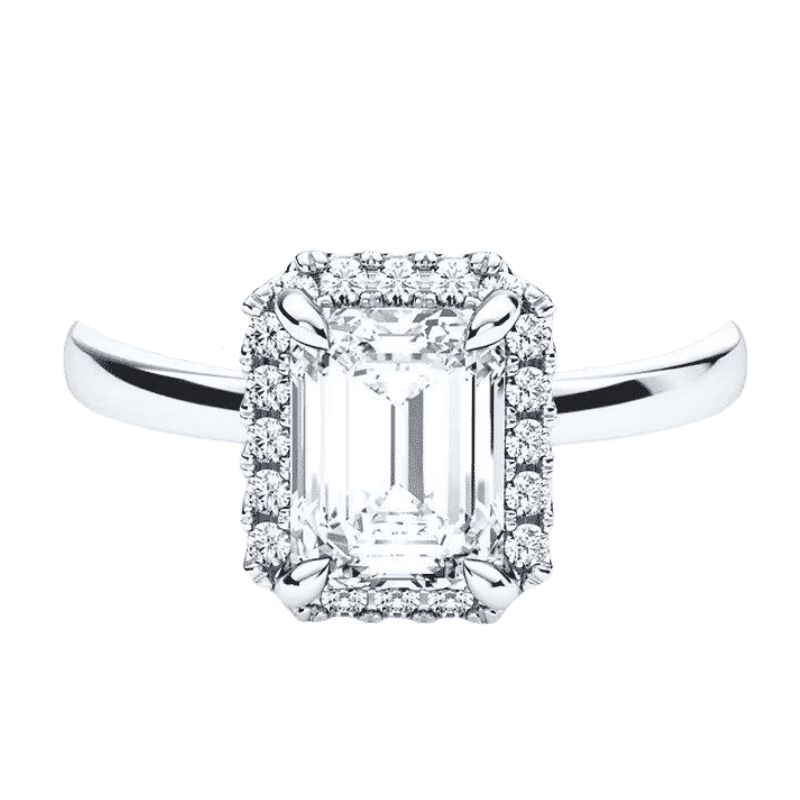
The Emerald shape is rectangular with step facets and an excellent “mirror” effect. This cut allows to highlight the clarity of the stone, as inclusions become more visible, which is why extremely clear (VS1 and higher) diamonds are valued. The price of Emerald diamonds can be lower than Round ones, but they require a higher clarity category. Such a shape creates an elegant, classic and recognisable image.
Square diamond shape, Eng. Asscher
The Asscher shape is square, resembling the Emerald cut, but with larger and stepped facets. It creates a spiked “sunbeam” effect as light begins to reflect through six layers of facets. This shape became popular at the beginning of the 20th century and is still associated with the Art Deco style today. Asscher diamonds are a great choice for those looking for an exclusive, retro-inspired design.
Cushion diamond shape, Eng. Cushion
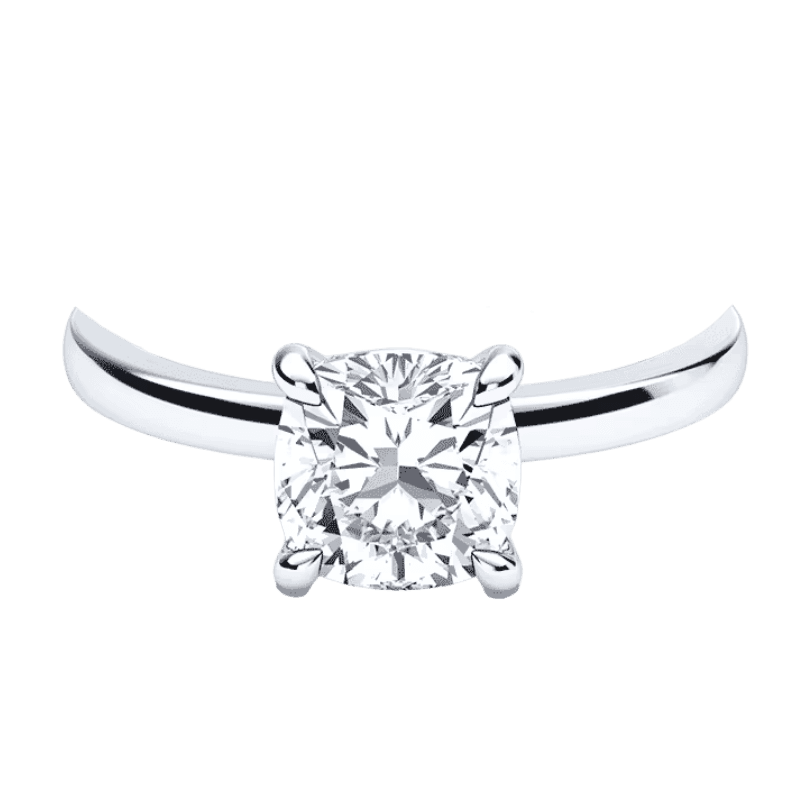
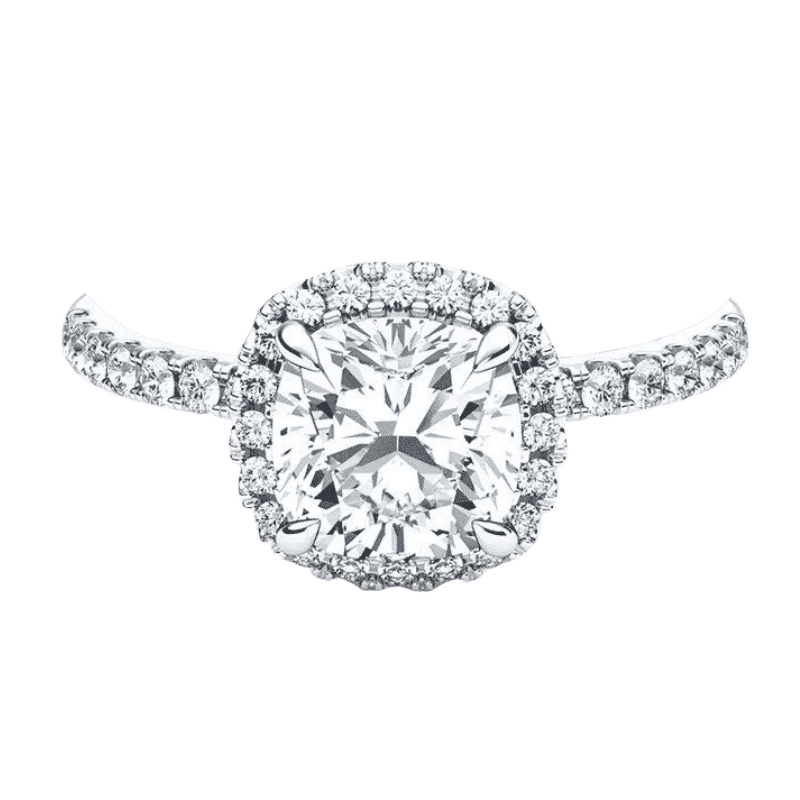
The Cushion diamond shape, also known as the Cushion cut, has a square or rectangular silhouette with rounded corners. Its facets resemble an antique, soft brilliant-cut diamond, making this shape suitable for rings where one wants to balance traditions and contemporary charm. The price and weight of Cushion diamonds go perfectly with romantic design, engravings and the halo effect.
Drop or Pear diamond shape, Eng. Pear Shape
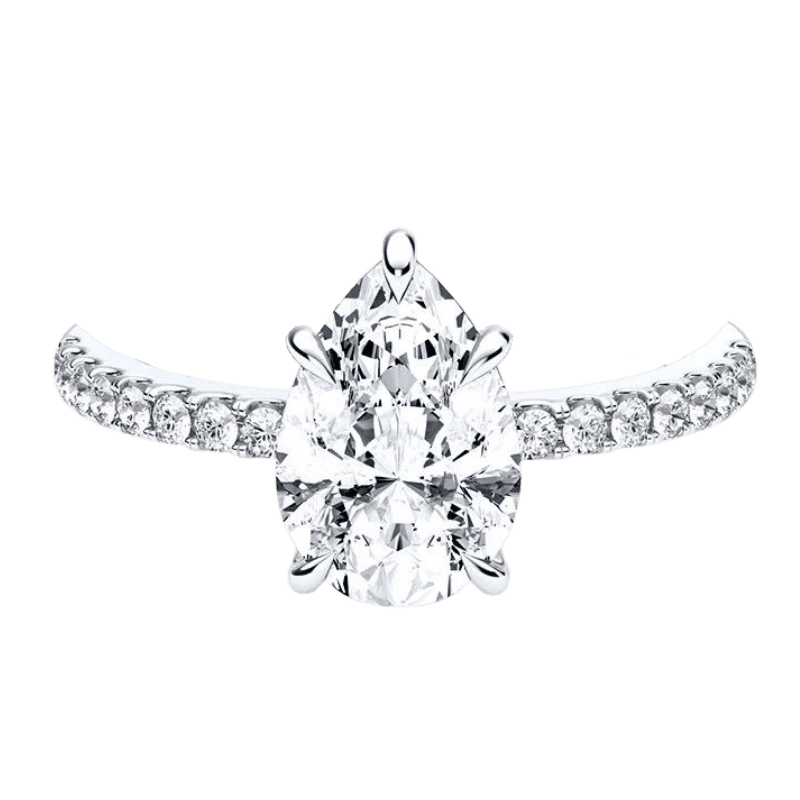
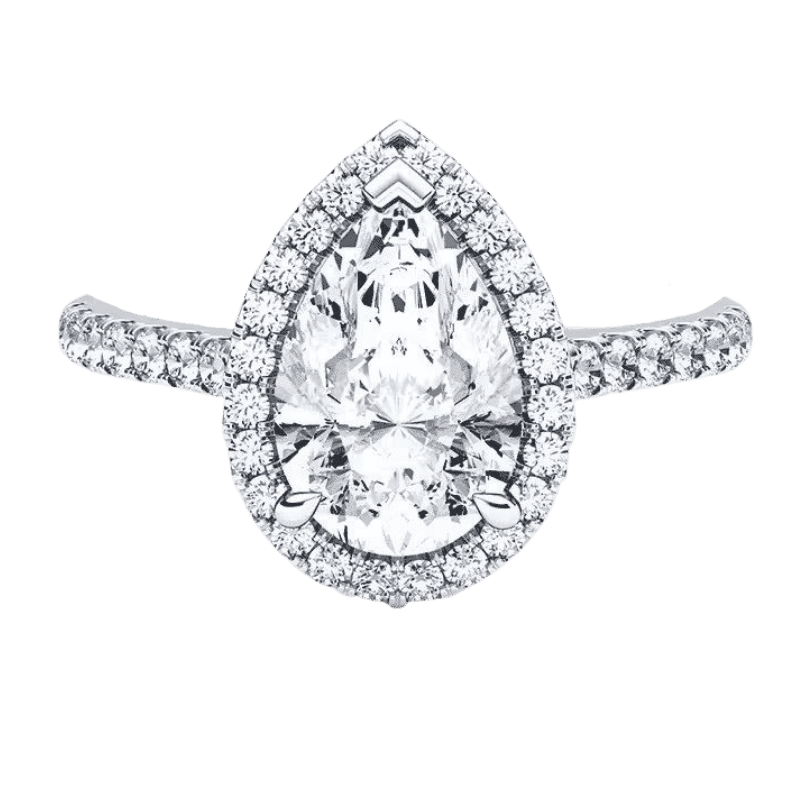
The Drop or “Pear” diamond shape combines the facets of the Round and Marquise shapes, creating a moderate but interesting silhouette. This shape perfectly elongates the finger optically, which is why it is especially favoured in engagement rings and drop earrings. The price of a drop-shaped diamond depends on the proportions of the elongated part of the brilliant-cut diamond – the more symmetrical, the higher the value.
Oval diamond shape with sharp corners, Eng. Marquise
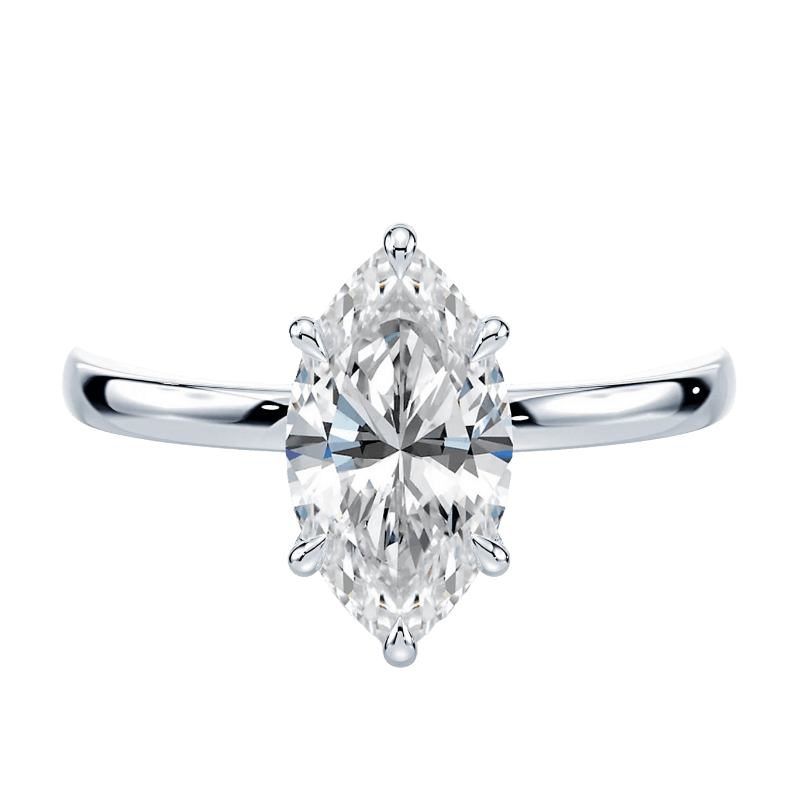
The Marquise shape is an exceptional boat or eye-shaped diamond with pointed ends. Its length is more than twice its width, making the stone look more impressive than its real weight. The price of Marquise diamonds features a good combination of carat and dimensions, and their glowing “tail” stands out in both rings and pendants. Properly placed, this diamond can give the ring characteristic an optical “slimming” effect.
Rectangular diamond shape, Eng. Radiant
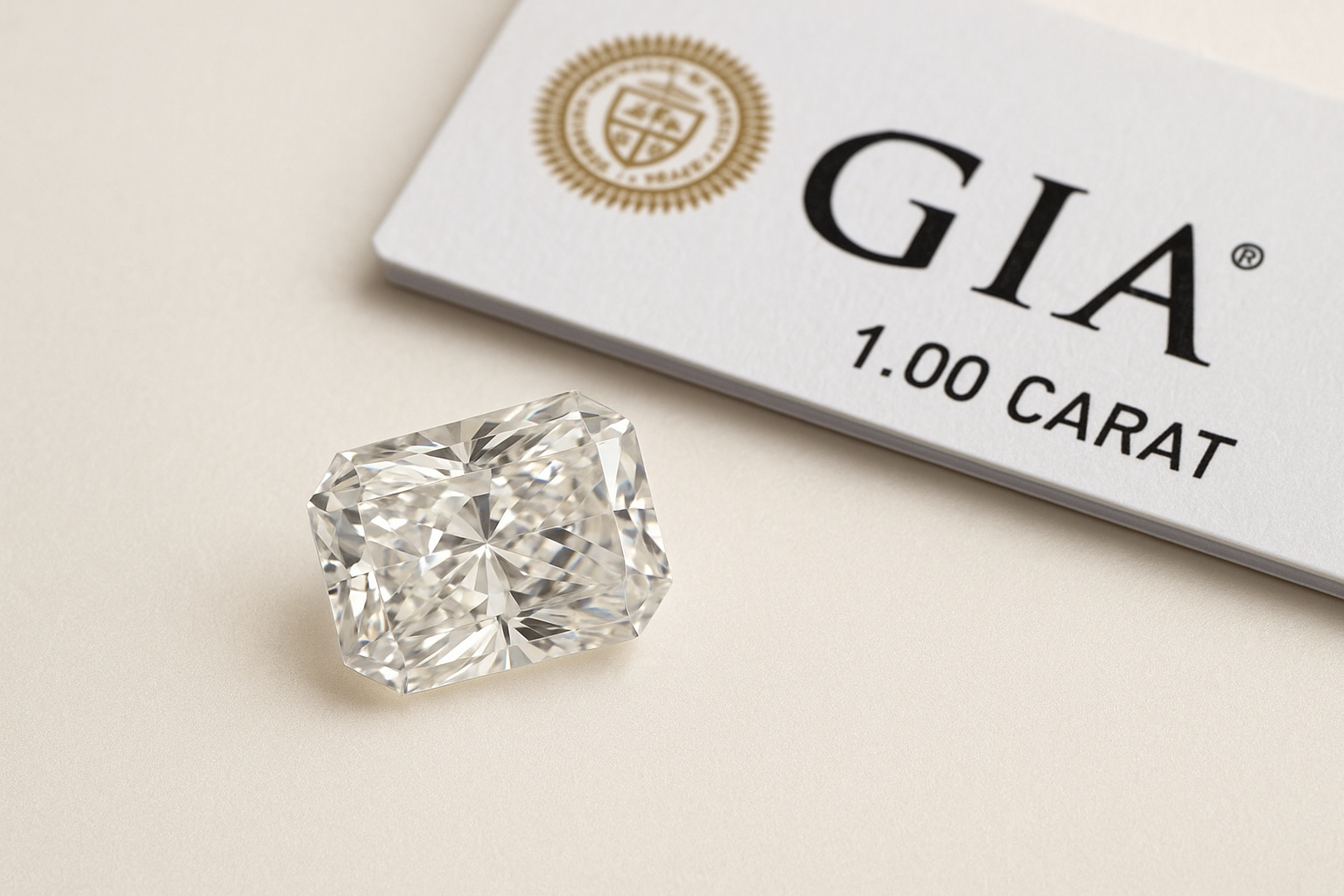
The Radiant cut combines both Emerald and brilliant-cut diamond characteristics, having both steps and three rows of facets. This gives the rectangular stone extra brilliance, which is loved by those who appreciate refined luxury. The price of Radiant diamonds is often higher than the Emerald shape, but lower than Round brilliant-cut diamonds of the same carat. The versatility of the shape gives designers a lot of freedom. The classic Radiant. Although the rectangular Radiant has already been mentioned, its classic variant has more facets and a more symmetrical cut. It combines intense brilliance and an impression of fragility. The price of a classic Radiant diamond can be higher due to the more complex cut. Such stones are perfect for exclusive engagement rings.Oval diamond shape, Eng. Oval
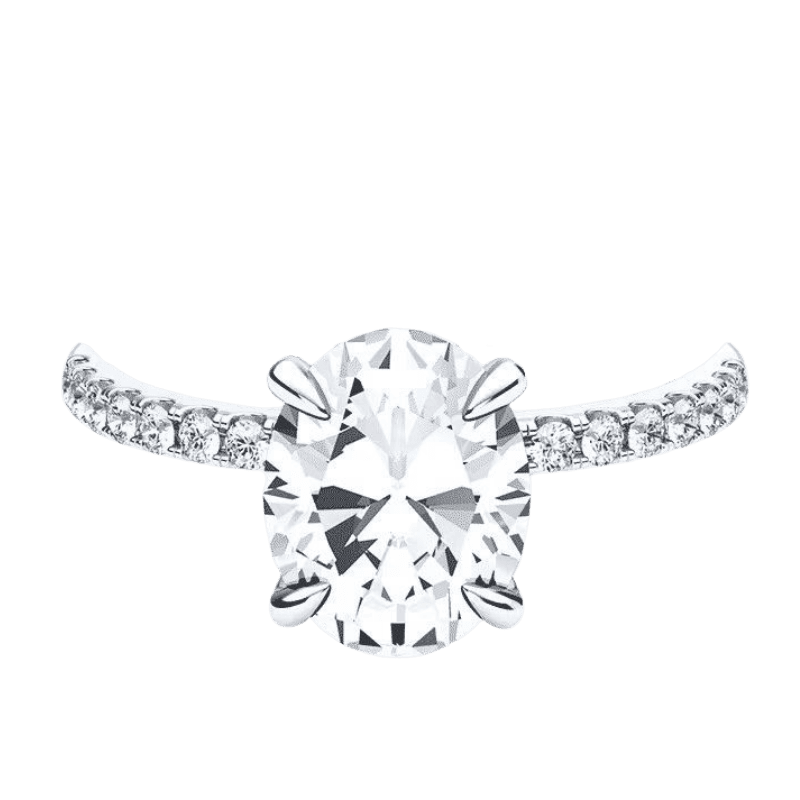
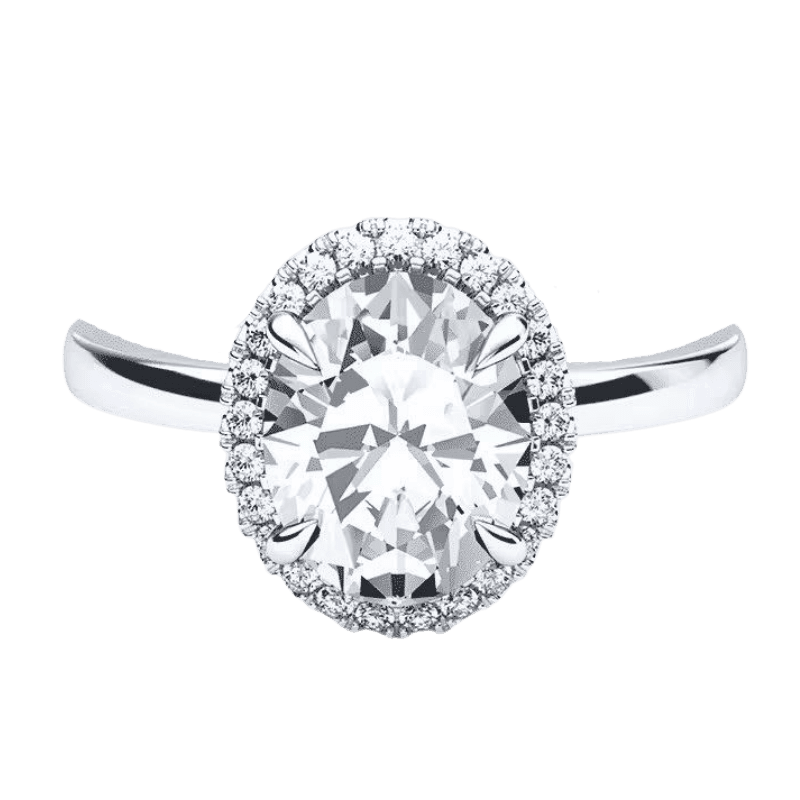
The Oval diamond shape is another master of brilliance, similar to the Round brilliant-cut diamond, but with an elongated profile. Its facets create intense brilliance, and the elongated shape visually lengthens the fingers. The price and carat ratio of Oval diamonds is often more attractive than Round ones, so this is a more economical alternative without compromising quality.
Heart diamond shape, Eng. Heart Shape
The Heart diamond shape is the most romantic choice, perfectly suited for love and engagement rings. Its symmetrical convex facets require exceptional cutting mastery, which is why the price of brilliant-cut diamonds of this shape is higher. The Heart diamond certificate confirms that the contours are even and proportional. This is a unique gift accent, conveying sentiments without words.
Rectangular diamond shape, Eng. Baguette
The Baguette diamond shape is a long, narrow rectangle, often used in side encrustations. It gives the design a linear quality and highlights the shape of the central diamond. The price of Baguette diamonds is usually lower than that of brilliant-cut diamonds, but they do not sparkle as intensely. These “baguettes” work best as accents in rings and bracelets.
Triangular diamond shape, Eng. Trilliant
The Trilliant is a triangular diamond shape with rounded corners, which typically has between 31 and 50 facets. It adds dynamism to the look and fits perfectly between the sides of two larger brilliant-cut diamonds. The price of a Trilliant diamond depends on the clarity and cut precision. This is an exceptional shape that is suitable for modern and bold jewellery designs.
Ellipse diamond shape, Eng. Ellipse
The Ellipse diamond shape is an Oval variant with a wider, shorter profile. This shape is more suitable for smaller carats, as it gives an overall elegant impression without a disproportionately elongated silhouette. The price of Ellipse diamonds is usually slightly lower than oval ones, but their brilliance and optical length will remain attractive.
Hexagonal diamond shape, Eng. Hexagon
The Hexagon diamond is a rare and exceptional shape with six sides. Its geometric impression creates a modern aesthetic that immediately catches the eye. The price of a Hexagon diamond can be higher due to a poor supply-demand ratio. This is an excellent choice for a unique engagement or gift detail.
Rose diamond shape, Eng. Rose Cut
The Rose diamond shape, also known as the “Rose Cut”, features a flat base and a dome-shaped top consisting of numerous trapezoidal and triangular facets. This antique cut style creates a soft, mysterious brilliance, as light spreads through a network of smaller facets. Rose cut diamonds are often used in vintage-style rings and pendants, emphasising a romantic aesthetic. Although their brilliance is not as intense as that of modern brilliant-cut diamonds, they have an unparalleled antique charm.
Old cut diamond, Eng. Old Miner Cut
The Old Miner cut diamond is a 19th-century English jewellery variation, which has an almost square silhouette and wide, trapezoidal facets. It creates a soft, matte glow that looks warmer than modern brilliant-cut diamonds. Due to wider facets, clarity becomes more visible, so usually, stones of a higher clarity category are chosen. The Old Miner shape retains more of the diamond, for example, so a 1 ct stone looks optically larger.
Star diamond shape, Eng. Star Cut
The Star diamond shape has a central hexagonal combination of facets which, together with small side facets, creates the image of a star. This rare shape requires extremely precise cutting so that the star contours are regular and symmetrical. Star Cut stones feature a unique optical effect – light spreads as if through small openings, giving the stone an exceptional brilliance. They are most often used in exclusive pendants or ring centres, where their star practically comes to life.
Square diamond shape, Eng. Square Cut
The Square diamond shape, often called a “Princess” or “Asscher” variation, has a clear, angular silhouette with flat sides. This shape allows a large part of the initial carat weight to be retained, so a 1 ct Square diamond often looks larger than its Round counterpart. Its straight lines give a modern and minimalist look, perfectly suited for contemporary rings. Square stones go well with both a single large gemstone and surrounded by smaller diamond details.
Half Moon diamond shape, Eng. Half Moon Cut
The Half Moon diamond shape is a semi-circular stone with a flat side facet. Most often, these stones are used as side encrustations next to a central Round diamond, creating a harmonious contrast. Half Moon stones highlight the shape of the central stone and create a subtle interplay of round and geometric lines. Perfect for elegant wedding rings, where the half moon details stylise the overall composition.
Trapezoid diamond shape, Eng. Trapezoid Cut
The Trapezoid diamond shape features two parallel and two unequal facets, giving the stone an expressive, asymmetrical profile. They often fill the spaces next to the central stone in a ring or bracelet, highlighting the main gemstone. Trapezoid stones create a dynamic, modern effect, and their unique silhouette goes well with both classic and avant-garde designs. This shape is favoured by jewellers who create exceptional and unexpected jewellery pieces.
Diamond clarity: the clarity factor
Clarity indicates whether there are inclusions and blemishes in the stone. Graded from IF (internally flawless) to I3 (inclusions visible to the naked eye). Every diamond certificate marks the clarity level, which can significantly affect the diamond price and beauty. Usually, VS1–SI1 level diamonds are chosen, which offer a good price-quality ratio.
Variety of diamond colours: “fancy coloured” stones
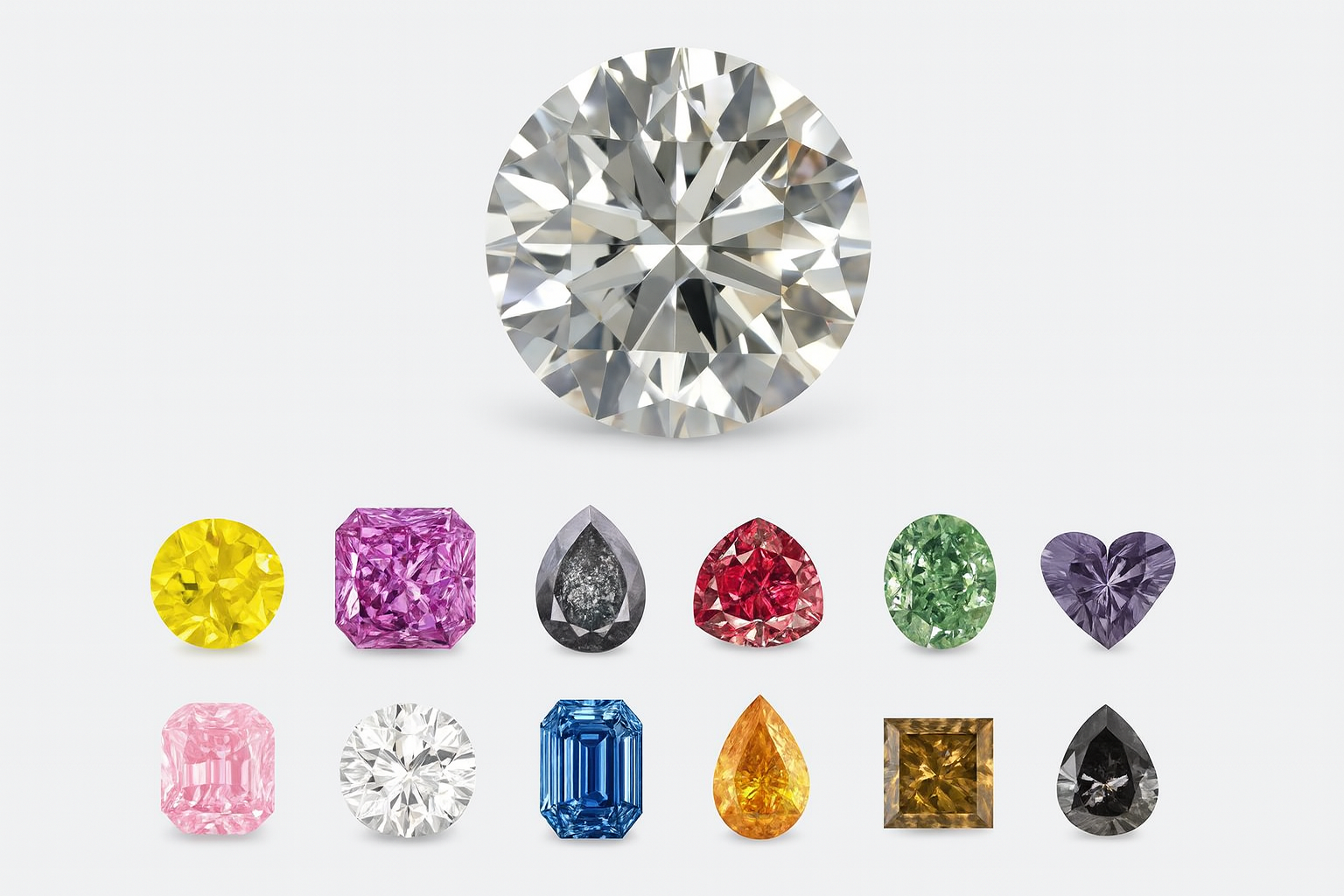
Besides traditional colourless diamonds, there are coloured gemstones: pink, blue, green, yellow, red. “Fancy coloured diamonds” are valued for their rarity and exclusivity, and their price is usually even higher than colourless ones. The historical significance and characteristics of these stones, such as colour and weight, make them special. These stones are perfect for unique jewellery pieces, exclusive engagement rings or investments in future collections.
Diamonds for gifting: symbolic value
A diamond is a symbol of love and loyalty – most often chosen as an accent in the production of engagement rings. The brilliant-cut diamond price corresponds to the strength of feelings and investment value. Gifting a diamond is a long-lasting gift that will remind of a special moment for a lifetime, especially when it is meant for a person to whom you want to show your special feelings.
Investment diamond trends
In recent years, gemstones have become popular for growing investments, especially investment diamonds from 1 ct. A growing interest in top-quality, VS–IF stones is noticeable in the market. Experts recommend diversifying an “investment diamond” portfolio by carat size and certificates.
Natural vs lab-grown diamonds
Natural diamonds form in nature, while lab-grown diamonds form under industrial conditions, but their chemical composition and physical properties are the same. Natural diamonds are more expensive due to limited supply, while lab-grown ones are a sustainable choice for budget and environment. Both categories are certified by GIA or IGI, so the perspective on “diamond or brilliant-cut diamond” remains the same – the certificate is important.
Diamonds online – what is important to know?
When buying diamonds online, it is essential to check the certificate number directly in the laboratory’s database. Pay attention to detailed descriptions of colour, clarity, cut and other parameters. Choose reliable shops offering guarantees, free returns or exchanges. Online purchasing provides access to a wider supply and comparison opportunities. Take advantage of this opportunity right now and invest in unique diamonds that will not only adorn you but also retain their value.