Which gold fineness is best? Tips for choosing gold jewellery pieces
Gold is one of the oldest and most valued precious metals in the world. However, when choosing jewellery pieces or investment items, the question arises: which gold fineness is best? The answer is not that simple – it all depends on needs, aesthetics, practical use, and even cultural habits.
What is gold fineness and how to understand it?
Gold fineness is a number indicating the amount of pure gold in an alloy. For example, 585 fineness means that 58,5 % of the alloy consists of gold, and the remaining part – other metals. 585 fineness gold is stronger and more suitable for everyday wear compared to purer forms of gold, which are often more expensive and intended for investment. This is an important indicator that determines the value, durability, and colour of a jewellery piece.
Gold is one of the oldest forms of currency, so it is important to understand its purity and composition. Mixtures of gold and other metals, such as copper and silver, affect the properties of gold, therefore pure gold is not usually used in jewellery due to its softness.
Different finenesses are popular in different countries: in Lithuania, 585 is mostly used, in Germany 333 or 375 fineness is also common, while in eastern countries – a higher one, for example, 916 or even 999. Gold purity is measured in parts per thousand, for example, 585 fineness means that out of 1000 parts 585 is pure gold.
Gold fineness table – a quick guide
| Fineness (metric) | Carats (carat) | Pure gold content (%) |
|---|---|---|
| 333 | 8K | 33,3% |
| 375 | 9K | 37,5% |
| 585 | 14K | 58,5% |
| 750 | 18K | 75,0% |
| 999 | 24K | 99,9% |
Gold fineness table helps to quickly evaluate how much gold is in the item you have or are buying. There are 375 585 750 finenesses that indicate the amount of pure gold in the alloy, and each of them has its advantages and disadvantages related to the durability and quality of jewellery. The term alloy mass is used to describe the purity and quality of gold alloys, as different carat standards reflect relative amounts of precious metals.
How does gold fineness affect the properties of the item?
The amount of gold in the alloy determines not only the value of the item, but also its strength. The higher the fineness, the softer the item and the more prone it is to deformation. Pure gold is usually not used for jewellery, as it is too soft and easily damaged. Therefore, gold fineness must be chosen considering the purpose of the item – whether it is a ring for everyday wear, or a luxurious necklace for an occasion. That various alloys are used to increase the strength of gold jewellery, therefore certain combinations create a more durable item suitable for everyday wear, such as rings or bracelets. It is important to pay attention to the fineness, as it helps to ensure that the item meets official purity standards and is reliable.
For example, gold fineness 750 is more popular in the production of luxurious jewellery, however for everyday wear 585 or even 375 fineness alloys are more suitable. The mass parts of the alloy help to determine how much pure gold is in it, reflecting the value of the precious metal according to its composition in a certain weight of the alloy.
Secrets of white gold: what gives it its colour?
White gold fineness depends on how much pure gold is in it, and the colour is determined by added metals – palladium, nickel, silver or zinc. This alloy, also called white, is formed by mixing yellow gold with white metals in order to obtain a certain colour and clarity. Often white gold is additionally plated with rhodium so that it would be shinier and wear less. Rhodium plating gives white gold an exceptional whiteness and improves its durability.
The inclusion of silver (silver) in gold can affect the colour of the alloy and shade variations. By adding different percentages of silver, it is possible to soften the red shade of the alloy, creating a softer appearance.
White gold price can be higher due to additional processing or rarer alloys, for example, when palladium is used. Interestingly, the palladium price has increased recently, which is why white gold has also become more expensive.
Russian gold – what is its special feature?
When talking about gold, it is important to mention the historically valued Russian gold. Often it is of 583 fineness – slightly lower than 585, but still widely valued due to its warm shade and strength. Different fineness levels indicate the amount of pure gold in the alloy, which affects the durability and appearance of jewellery. In the Middle Ages, state-appointed assayers were responsible for checking precious metal items, and their applied mark, or ‘hallmark’, became an essential mark ensuring the quality and authenticity of selling gold items. Because of these properties, the Russian gold price remains competitive even today.
Types of metals and their effect on colour and properties
When we talk about alloys, it is important to understand what metals are used with gold. Mostly alloys are made with silver, copper, zinc, nickel and even rare metals, such as palladium or platinum.
Gold and silver alloys are especially important, because silver helps to create lighter rose gold shades and other colour variants.
An especially significant alloy is with copper and other metals – it is precisely because of copper that gold acquires a rose shade. By adding more copper, a darker rose gold is obtained, which is popular both in Lithuania and Russia. Rose gold shades can differ depending on the amount of copper in the alloy. Furthermore, the use of platinum with gold creates white gold, which is valued for its durability and aesthetics.
Which gold fineness is best? The answer depends on your needs
Although many believe that the higher the gold fineness, the better, practice shows otherwise. If you are looking for longevity, 375 or 585 fineness will be a great choice. For those wanting luxury and high value – 750 or 999 fineness will be more suitable.
Assaying is a process that is used in order to check the quality and composition of gold items. It is an historically important consumer protection measure in Europe, ensuring that gold alloys meet established standards.
It is important to mention that a gold alloy, in which gold is mixed with other metals, such as copper or silver, also has a great influence on the colour and quality of jewellery.
Thus, answering the question which gold fineness is best, it is necessary to evaluate your goal: is aesthetics, value, or longevity the most important for you?
How does the gold price change over time?
Over the last decade, the gold price over 10 years has fluctuated significantly. Economic crises, geopolitical tension and inflation have had a major impact. Therefore, gold is often considered a safe investment, and the choice of fineness becomes not only an aesthetic but also an economic question.
In Lithuania, the purity and valuation of precious metals and their alloys are regulated by laws, which are supervised by institutions such as the Lithuanian Assay Office. These laws establish the types of different alloys and their respective finenesses.
The relative amount of precious metal in an alloy, known as fineness, is essential in determining the quality of gold items and is regulated by laws in Lithuania.
Gold price depends not only on weight and fineness, but also on the types of metals added to the alloy, as well as the design or manufacturer.
How to choose the right fineness for jewellery pieces?
When choosing a jewellery piece, evaluate how often you will wear it. 375–585 fineness is suitable for everyday wear, 750 or 999 – for holidays. If you have sensitive skin, choose white gold with palladium, as it is hypoallergenic. Also, do not forget that a higher fineness does not mean longevity – the finish of the item and the quality of the metals are also important.
Jewellery gold features a special shine and colour depth, and gold fineness directly affects these properties.
How to recognise a real fineness
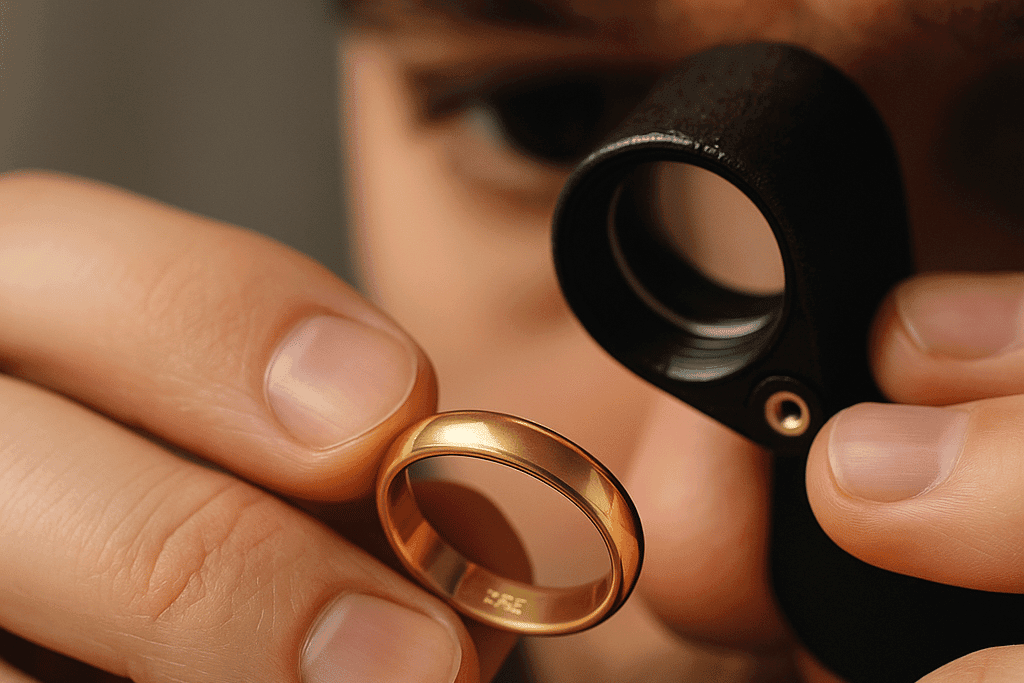
The amount of gold in the alloy is marked with a special stamp. In Lithuania, the Lithuanian Assay Office is responsible for assaying, which marks every item. This way buyers can be certain about the quality and quantity of gold.
The mark, as an historical aspect of assaying, was introduced in Europe in the 13th century as a consumer protection measure ensuring the quality and authenticity of gold items
Gold is one of the oldest and most valued precious metals in the world. However, when choosing jewellery pieces or investment items, the question arises: which gold fineness is best? Different levels of gold purity, such as 585 and 750, are popular in various regions – 585 is often chosen in Lithuania due to the balance of price and quality, while 750 gold is favoured in many European countries. Gold fineness is important in determining the quality and value of gold jewellery, as it indicates the amount of gold in the alloy and meets legal standards in Lithuania. The answer is not that simple – it all depends on needs, aesthetics, practical use, and even cultural habits.
practical use and even cultural habits.

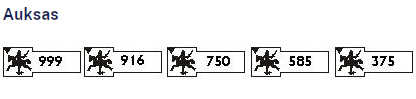



Lithuanian state control hallmark
A mark established by the Republic of Lithuania, which confirms that the item has been checked and marked by the Lithuanian Assay Office and meets the specified fineness.
Baltic gold – what is its purpose?
Although the term Baltic gold is often used figuratively (e.g., to describe amber), in some places it is also used when talking about gold items originating from the Baltic states or their design direction. Such items often stand out for their subtlety, symbolism and unique national design.
These items feature high quality and are certified according to strict standards, ensuring their value and authenticity.