Diamond and technology: create a jewellery piece yourself – a new jewellery experience
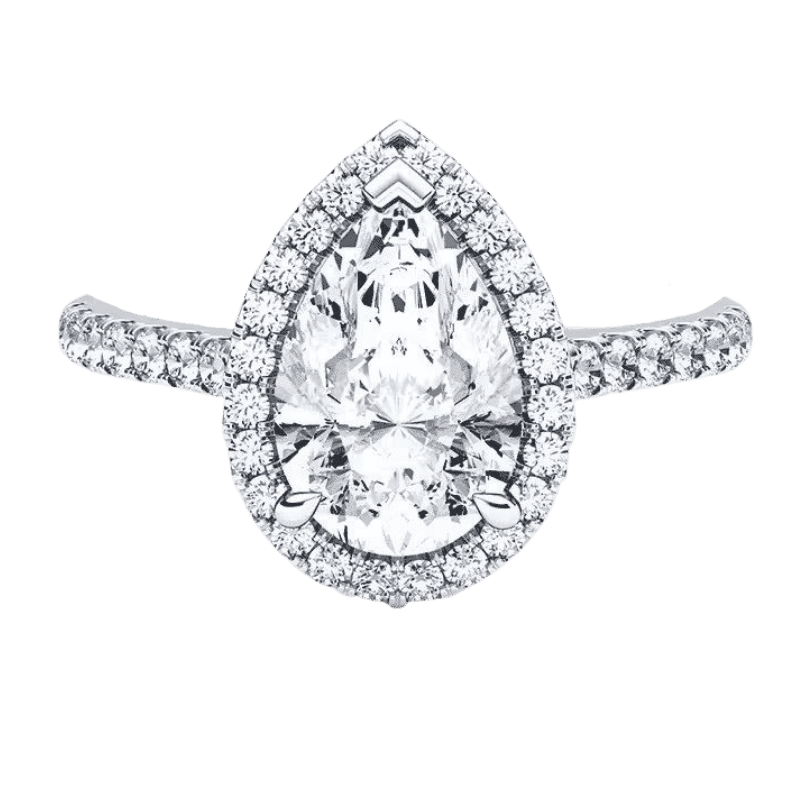
Today, a diamond can be not just a dream, but a clearly managed process where you decide everything. We offer only high-quality, certified diamonds and jewellery pieces, so that every client can find the most suitable option for themselves. On the TopDiamonds.online platform, the buyer chooses the diamond shape, colour, clarity parameters, and budget, and then selects their favourite design and immediately sees how the created unique jewellery piece design will look. This allows you to calmly compare how much different options will cost and how the design will look with a different diamond shape or carat weight – diamond size. Most importantly, everything happens transparently: clear technical data, certified documents, and guarantees. In this way, diamonds and brilliant-cut diamonds become precisely defined choices, rather than vague concepts.
Try our platform – the best diamond offers straight from the online exchange.
The history of diamonds: from the depths of ages to modern luxury
The history of diamonds is essentially a story about the human desire to discover and appreciate what is rarest and most valuable in nature. A diamond is not only the hardest known natural mineral but also a gemstone whose growth takes millions of years under immense pressure and high temperature deep below the Earth’s surface. The first diamonds were found in India, later in Africa, Brazil, and other parts of the world, but their extraction has always been limited and complex. For this reason, diamonds have become a symbol of luxury, power, and exclusivity, adorning the jewellery pieces of royal families and nobles. Today, diamonds are an object not only of beauty but also of investment – their value grows over time, making them a reliable long-term asset. Moreover, a diamond is an excellent gift that symbolises not only lasting value but also a special feeling, which is why it is often passed down from generation to generation. However, the charm of diamonds lies not only in their rarity or hardness but also in their ability to reflect light and create a unique sparkle that has fascinated people for thousands of years.
Diamond types: natural, lab-grown, and rarer variants
Diamonds are among the most valued gemstones in the world, but not all diamonds are the same. The main types are natural diamonds and lab-grown diamonds. Natural diamonds are diamonds that form in nature over millions of years, under high pressure and temperature. Lab-grown diamonds are created using the most modern technologies, recreating the natural diamond formation process, so they are essentially indistinguishable in both appearance and properties. Besides these two main types, rarer variants are increasingly gaining attention – coloured diamonds, which feature a unique hue and become an exclusive accent for jewellery pieces. A diamond is a gemstone that always remains desirable due to its rarity and beauty. A brilliant-cut diamond is a round shape diamond that is especially popular in the production of engagement rings due to its sparkle and classic shape. Whether you choose a traditional one or are looking for a unique stone, diamonds are a choice that always remains fashionable and valuable.
TopDiamonds.online: create a jewellery piece in three steps
TopDiamonds.online process is simple – create a jewellery piece in 3 steps: 1) choose a certified diamond from the online exchange, 2) select the design of the ring, earrings, or pendant, 3) confirm the order and collect the perfect jewellery piece.
In the first step, you choose the diamond shape and the specific diamond – we show clear 4C parameters, photos, videos, and certificate (GIA, IGI, HRD) information.
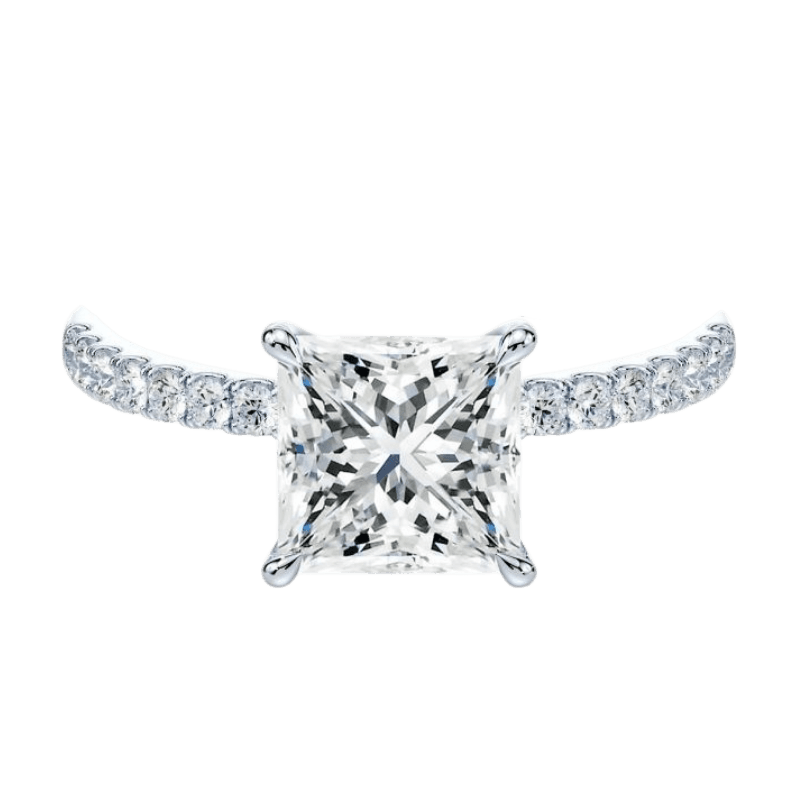
In the second step, you choose the product: a ring, a pendant, or earrings; you set the gold colour, setting type, and, if you wish, additional small diamonds in the band.
In the third step, you confirm the engraving, proportions, receive the production time and guarantees – everything transparently, with clear pricing.
Where to start: shape first or idea first
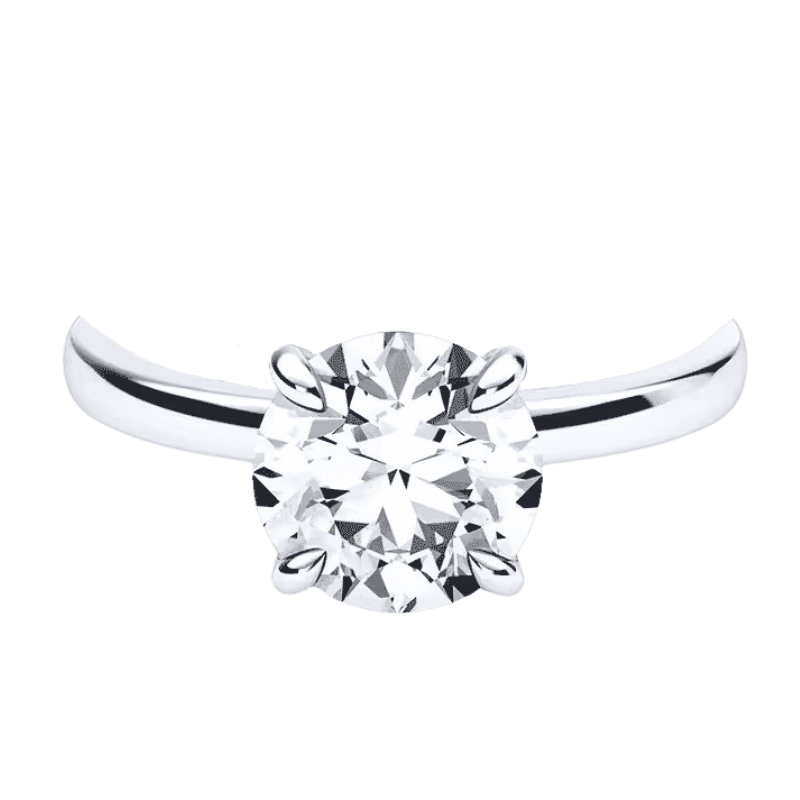
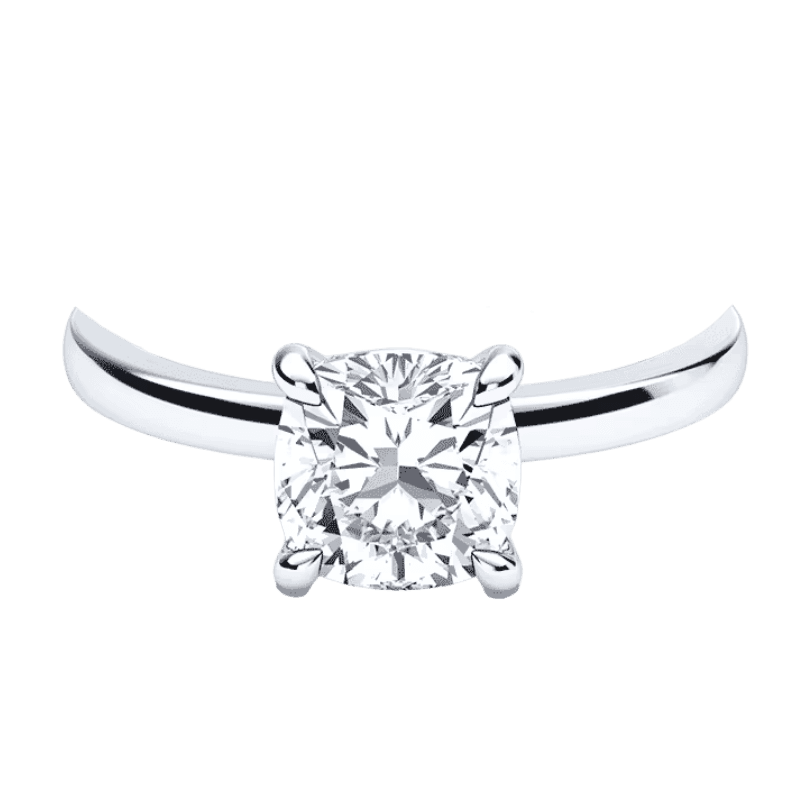
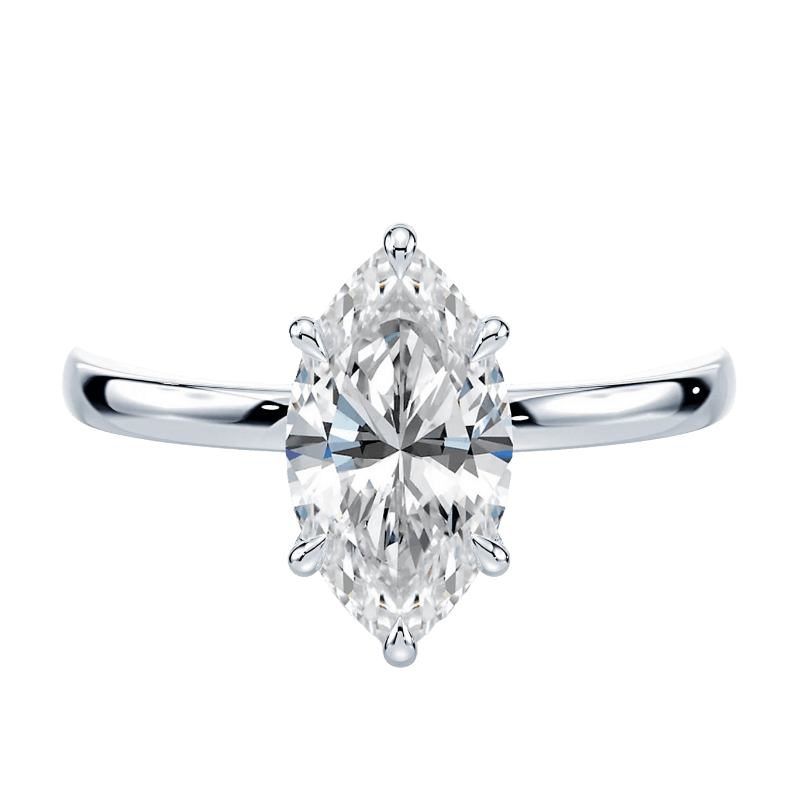
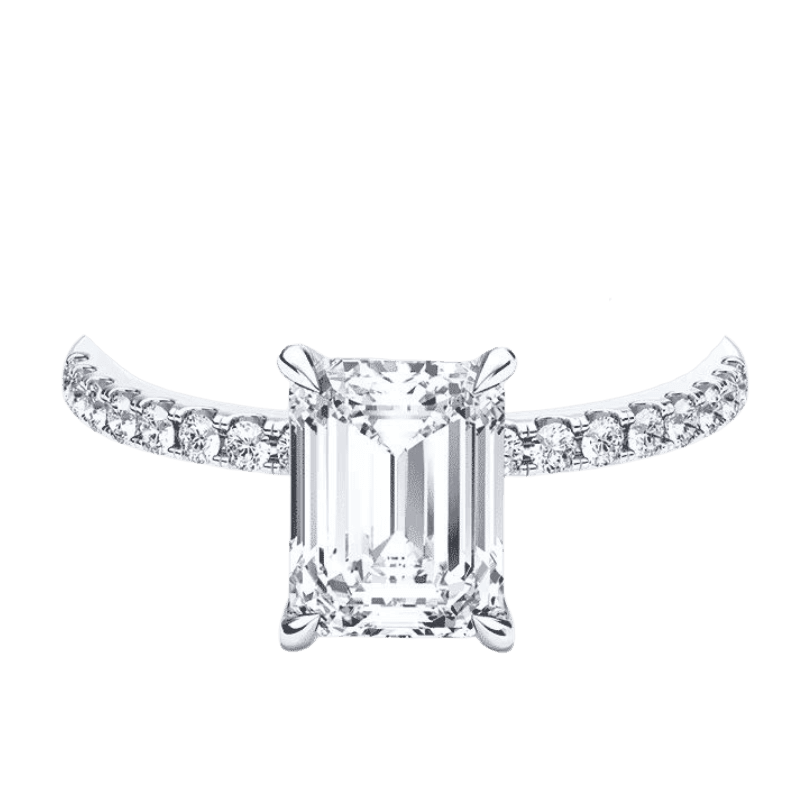
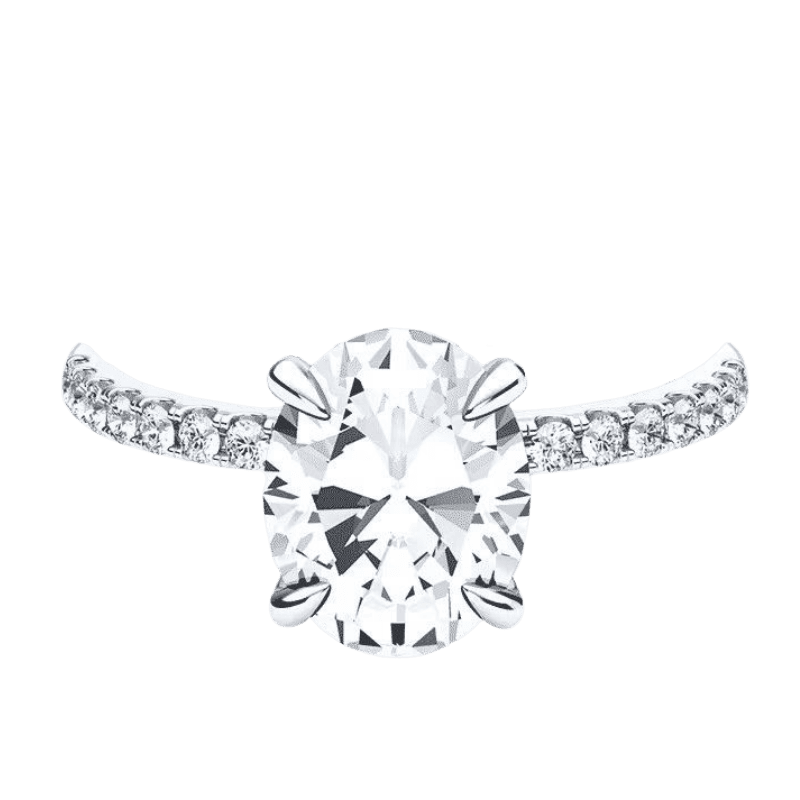
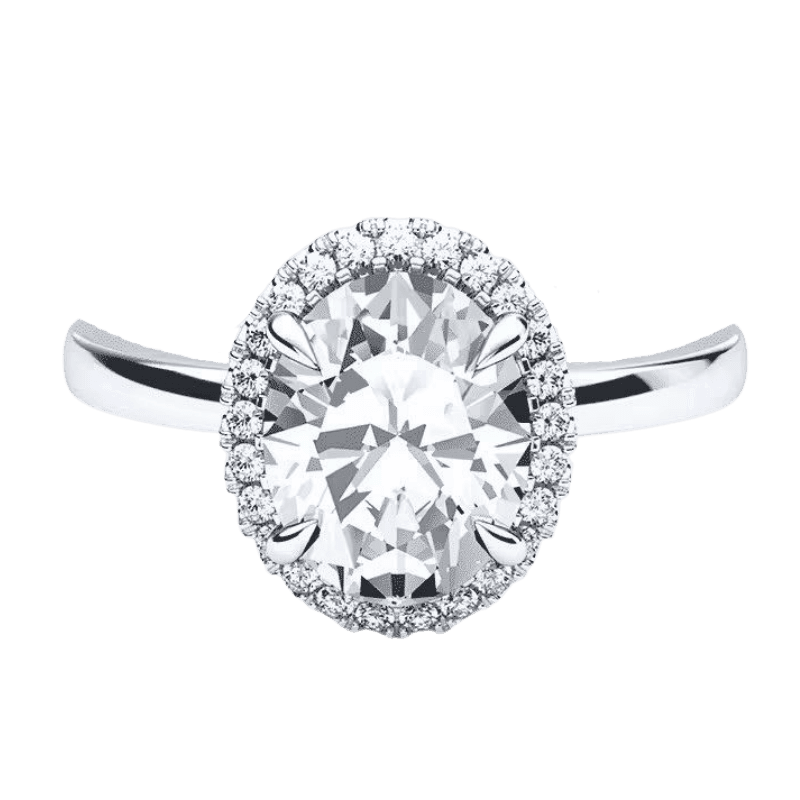
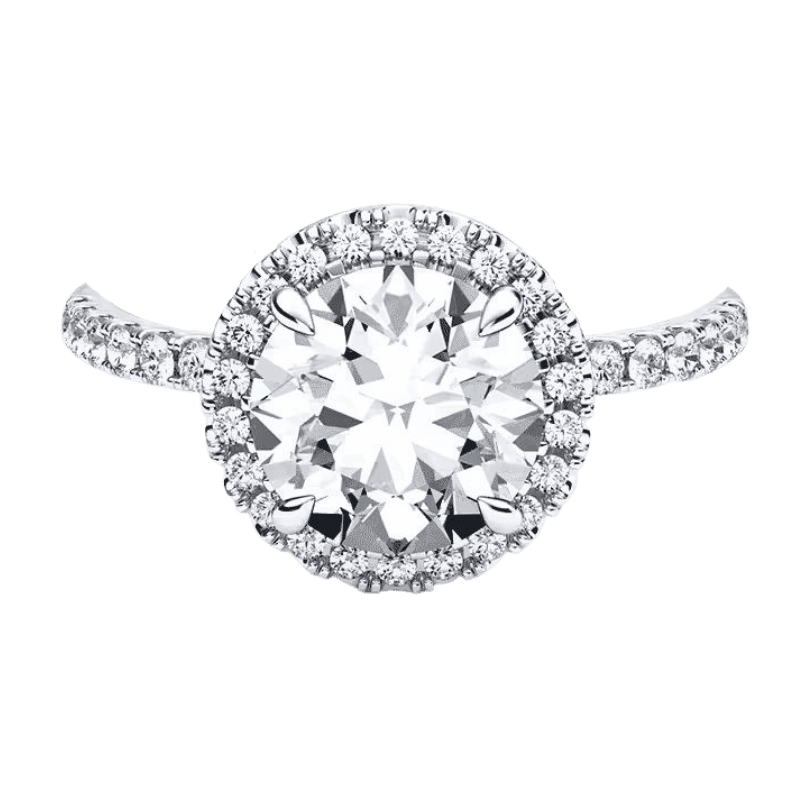
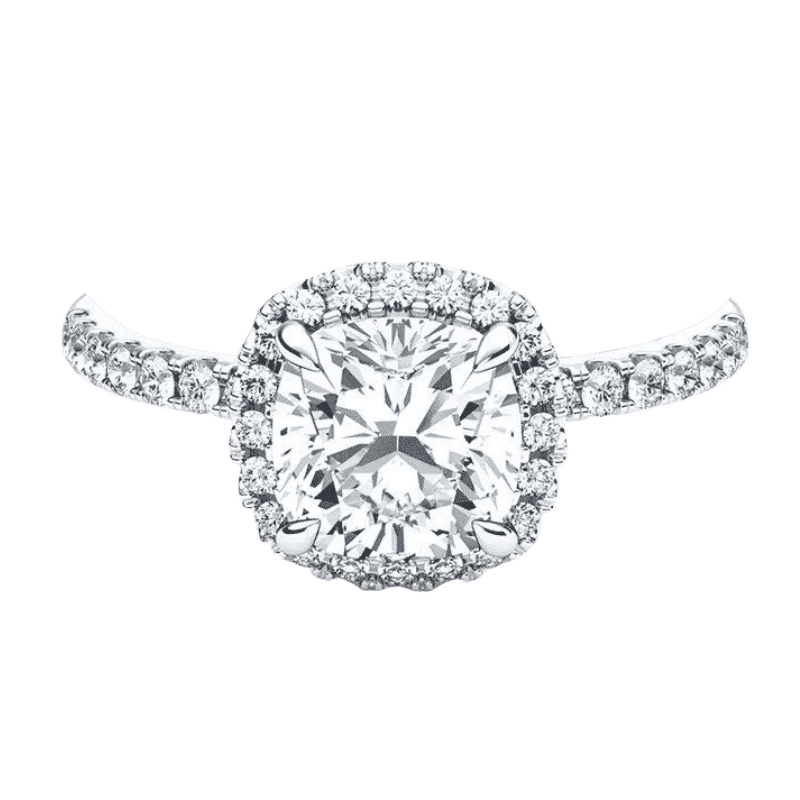
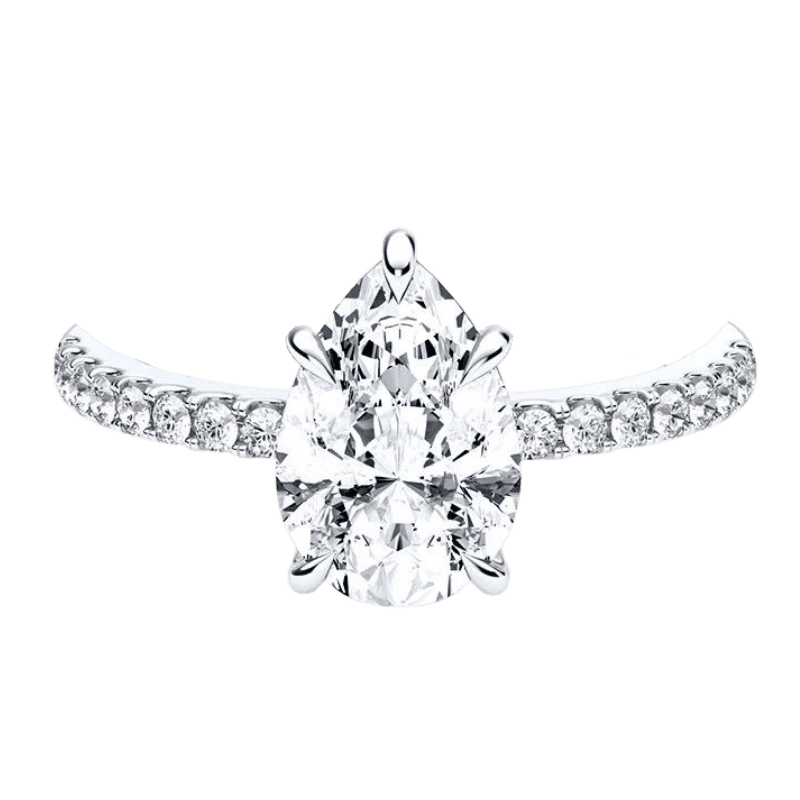
Many start with the diamond shape – for example, round shape Round, oval, Princess, Emerald, Cushion, Pear, Radiant, Heart. Among them, the cut is also distinguished, which features unique facets and exceptional light reflection, thus it is often chosen when looking for an exclusive appearance. Other buyers create a vision first: rings, earrings, or pendants with a single stone, in a minimalist style, or with additional stones on the sides. Both directions are correct, as you can select a diamond based on aesthetics, budget, and intended use. If you are planning an engagement ring, it usually starts with the shape that the future fiancée likes the most. Later, the parameters on which the price and sparkle depend the most are specified.
Brilliant-cut diamond or diamond: what is the difference?
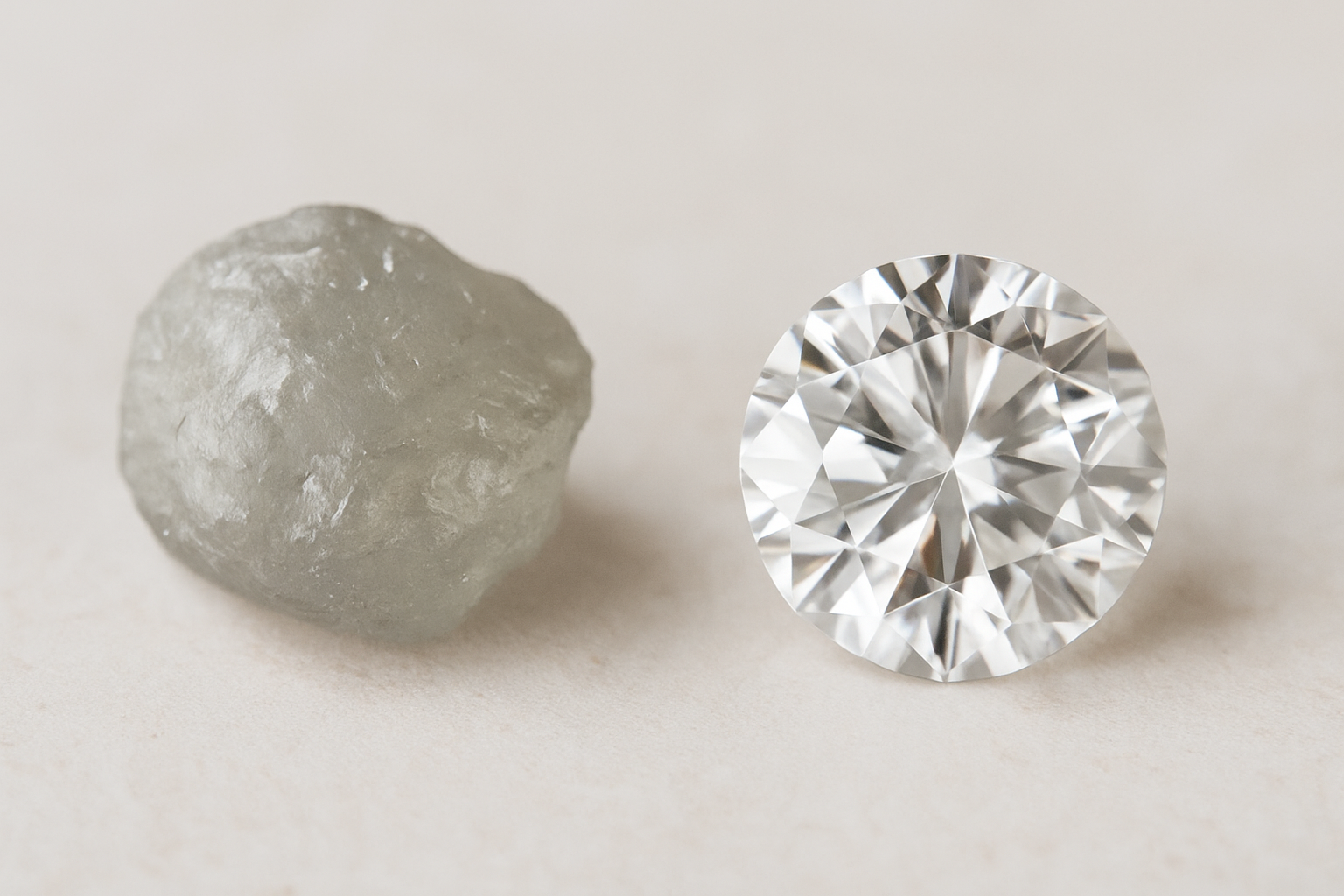
A common question – a brilliant-cut diamond or a diamond, what is the difference between a diamond and a brilliant-cut diamond. Simply put, a diamond is a natural or lab-grown gemstone, while a brilliant-cut diamond is a diamond cut in a specific way, having a facet system that maximises the play of light. Every brilliant-cut diamond is a diamond, but not every diamond is a brilliant-cut diamond. Only those diamonds that are processed in a certain way – using special cutting and polishing methods for this, acquire the status of a brilliant-cut diamond. So, “brilliant-cut diamond” describes the shape and cut, and “diamond” – the material and origin. Because of this, we speak of diamonds and brilliant-cut diamonds as the same material, just different levels of its processing. This difference is important when choosing, as it is the cut that determines how intensely your stone will sparkle.
4C system: what actually determines sparkle and price
The classic 4C scheme – Carat, Colour, Clarity, Cut – helps to rationally evaluate the quality level. These parameters are highly important for diamonds, as they define the main properties of diamonds that determine their value and appearance. Carats define the weight and visual size, colour determines the degree of whiteness, clarity – the inclusions, and cut (Cut) – how effectively the brilliant-cut diamond returns light. When you want maximum fire, never underestimate the cut: an excellent cut makes even a more modest colour gemstone sparkle. Colour and clarity limits are usually chosen so that the eyes do not see flaws, but the price remains reasonable. Such a balance allows you to achieve the best visual result for a reasonable budget.
Diamond processing: the path from raw material to masterpiece
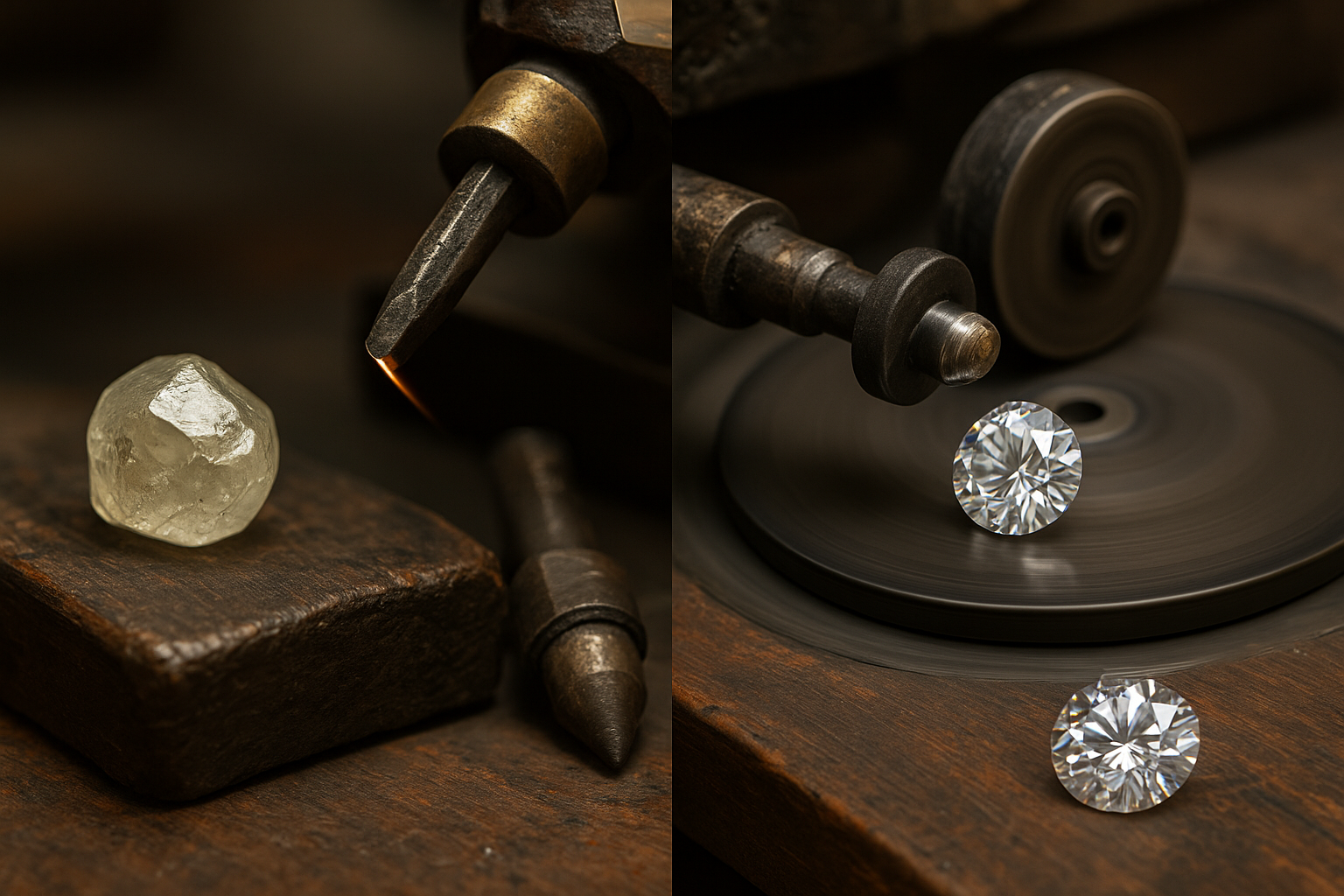
Diamond processing is true art, requiring not only technical knowledge but also creativity. A diamond is found in the depths of the Earth as a raw material, which at first glance may look quite unimpressive. However, it is precisely from this stone that a long journey begins: first, the diamond is carefully cleaned, cleaved, and sorted by quality. Only then does the cutting and shaping process begin, during which the diamond is transformed into various shapes – from a classic round brilliant-cut diamond to exclusive, modern silhouettes. Each cut and facet is thought out so that the stone reflects light maximally and reveals its beauty. Diamond processing is a process that can take from a few days to several months, depending on the size and complexity of the stone. The final result is a masterpiece that captivates worldwide and becomes not only a jewellery piece but also a work of art. A diamond is a stone that can be processed into numerous shapes, and every such creation bears witness to the master’s skills and creativity.
Diamond price: how to understand it transparently
A diamond’s price depends on all 4C parameters and market demand. Consumers often ask about the diamond carat price, as carats are sometimes mistakenly considered the main factor. In practice, this is not the case: a poorer cut 1 ct stone may look worse than a smaller but ideally cut one. Therefore, it is important to evaluate all parameters, and not just one number. All these parameters together determine the diamond – its visual impression, sparkle, and overall value. TopDiamonds.online provides clear indicators for each diamond, so you can see what diamond prices consist of and why one choice costs more than another.
The price of a 1 carat diamond: what to expect
The price of a 1 carat diamond and the price of a 1ct brilliant-cut diamond highly depend on the cut, colour, and clarity. The price of the same 1 carat diamond can differ even several times if you compare, say, an excellent cut F colour VS clarity stone with an average cut, darker colour, and a stone with more inclusions. Therefore, define your priorities in advance: whether visual size, whiteness, or maximum sparkle is the most important. By comparing several stones, you will quickly see how much individual parameters determine the price. Such analysis helps to choose rationally and maintain budget discipline.
GIA, IGI, and other certificates: why it is important
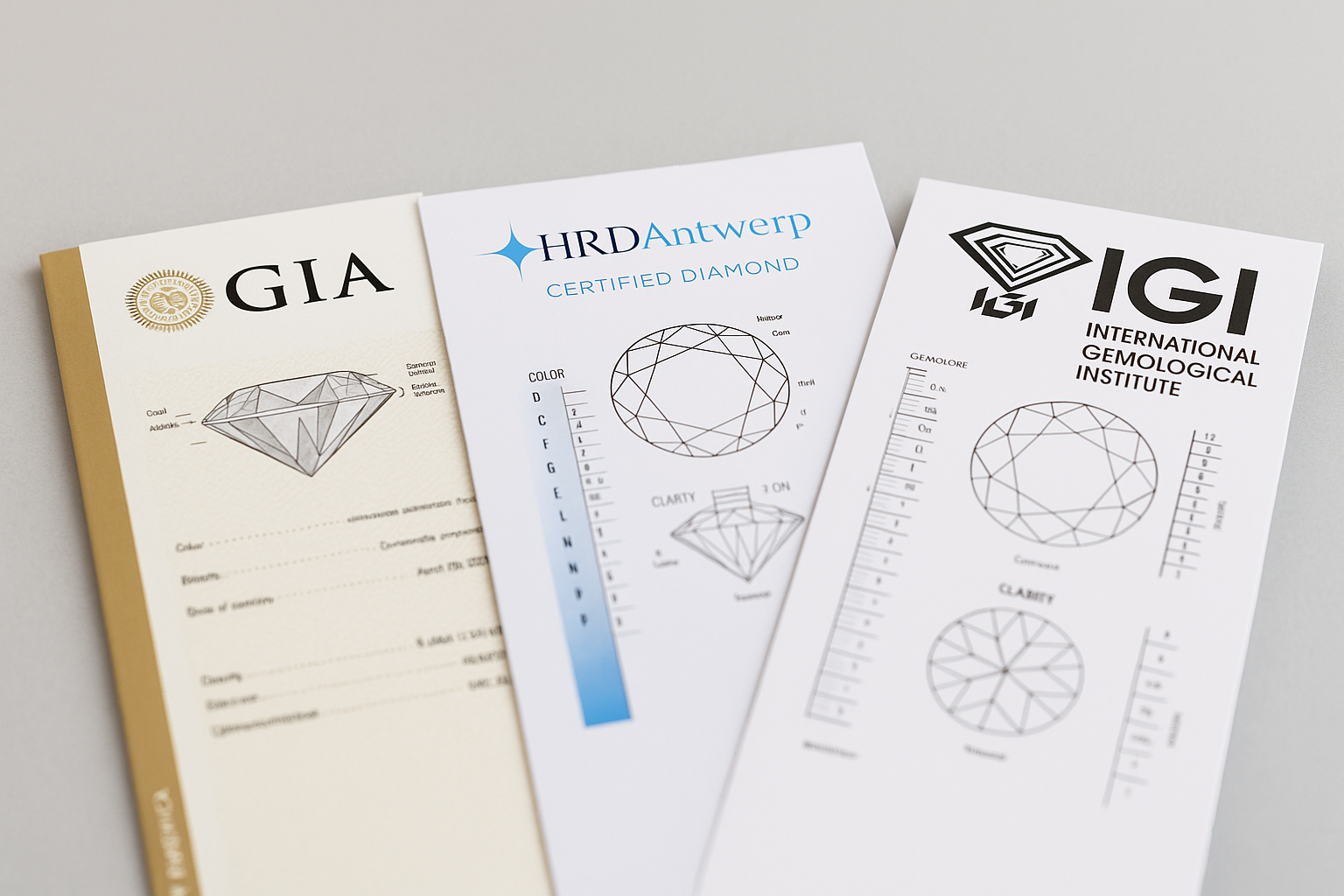
When choosing diamonds, always look whether the diamonds are certified. The most common certificates – GIA, IGI, HRD – provide clear parameters, drawings with inclusions, and an independent evaluation. Certificates provide transparency, thus the price of any brilliant-cut diamond becomes justified by documents, and not just declarations. This is especially important if you are planning an investment or will pass the jewellery piece on. Furthermore, such documents make insurance or later valuation of the ring easier.
Artificial and lab-grown diamonds: a sustainable alternative
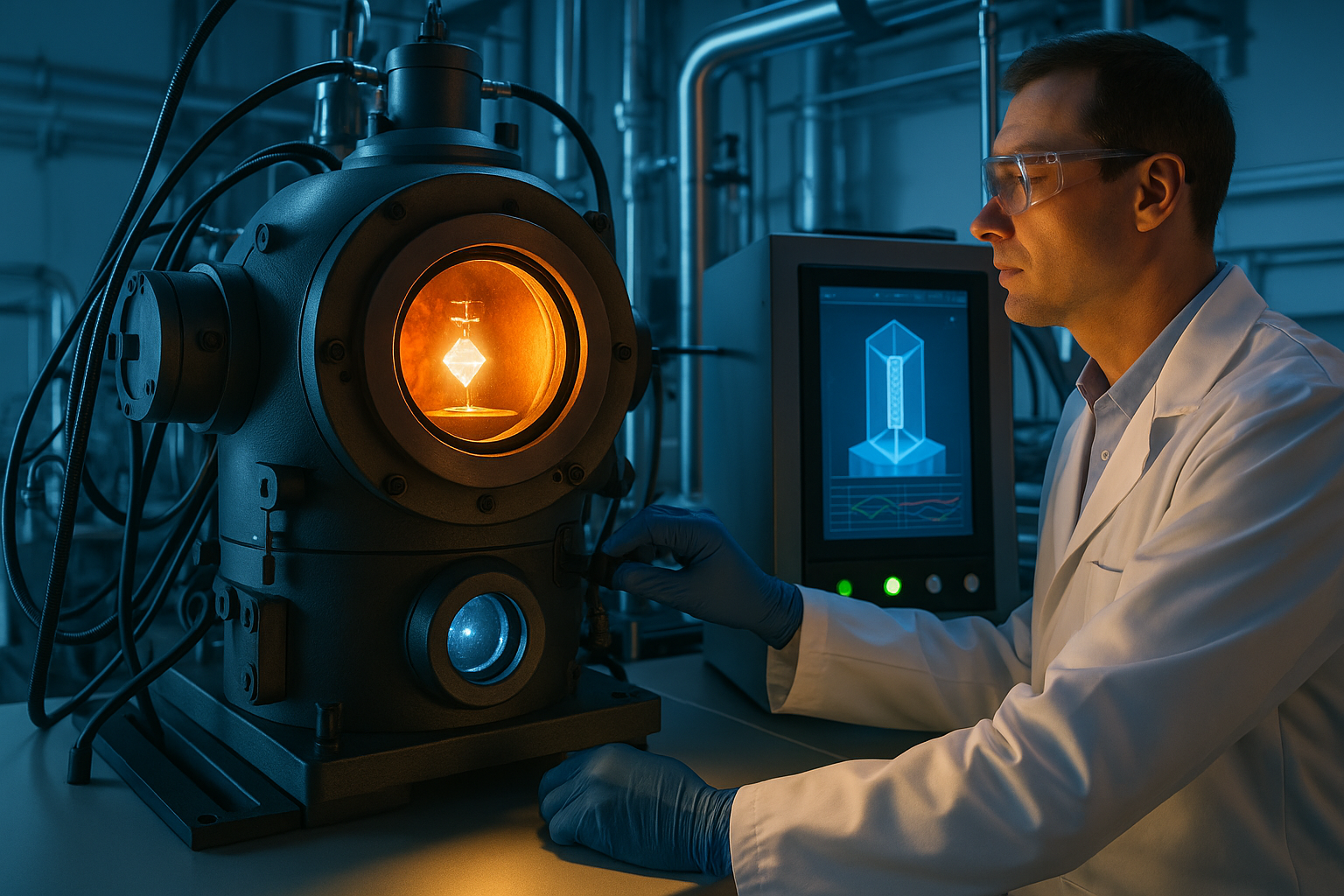
Artificial diamonds and lab-grown diamonds are stones grown using technologies, identical to natural ones in their optical and physical properties. The difference is the origin, not the beauty or durability. Such stones allow you to achieve a higher carat weight for the same amount, making them increasingly chosen as a smart alternative. If the topic of sustainability is important to you, lab-grown solutions become a natural choice. Moreover, lab-grown diamonds can be a great idea for a second jewellery piece – for example, earrings or a pendant.
Colours that change the character
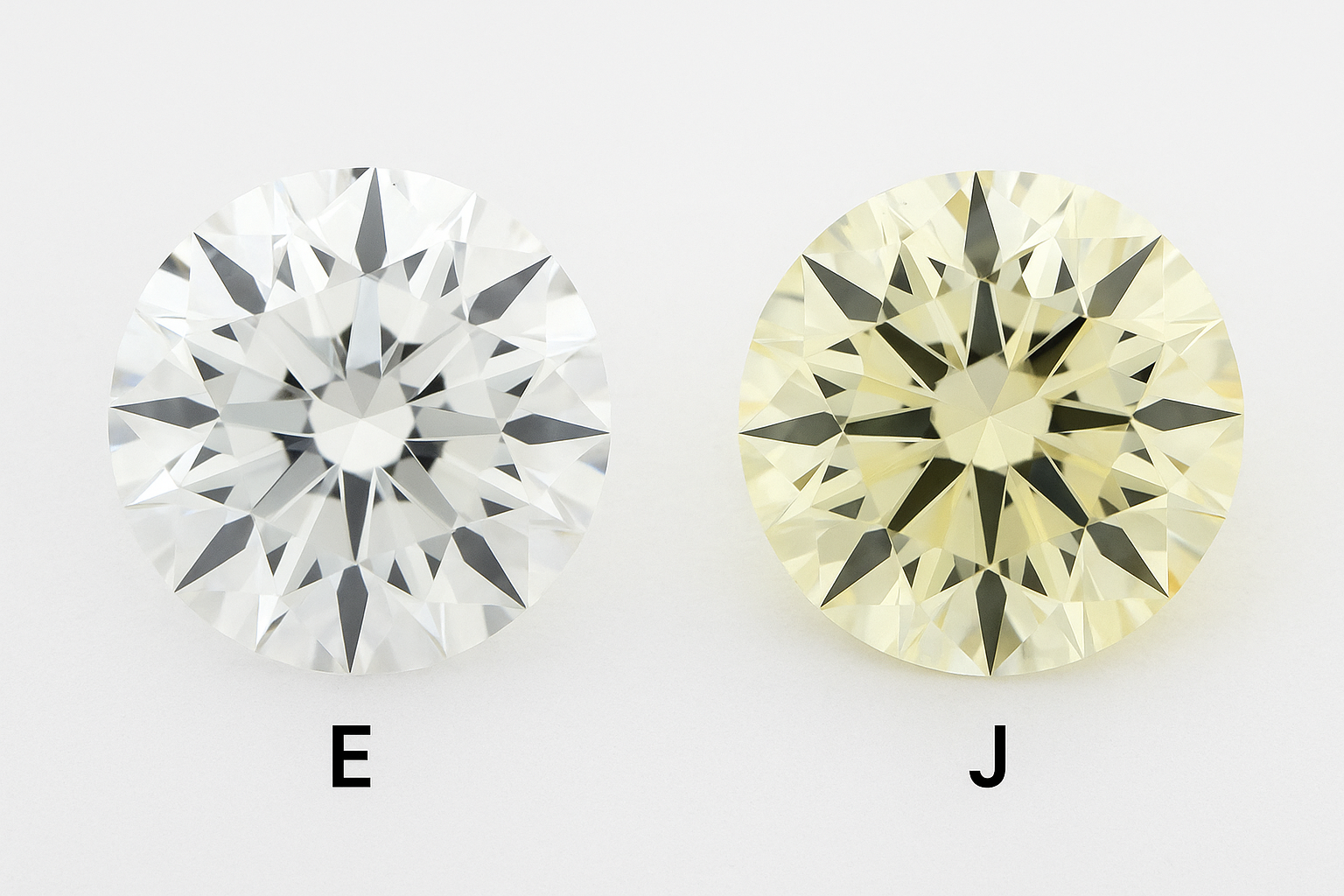
On the colour scale from D to Z there are many hues, but in everyday life, the F–H range is the most popular. These colours offer an excellent ratio between whiteness, price, and visual impression. If you prefer a warmer sparkle, yellow gold pairs beautifully with an H colour diamond and highlights the fire of the brilliant-cut diamonds. White gold or platinum creates a cooler background, which is especially suitable for higher colour diamonds. Still doubting? Choose a few options and compare real photos and videos.
How to choose clarity: what the eyes see
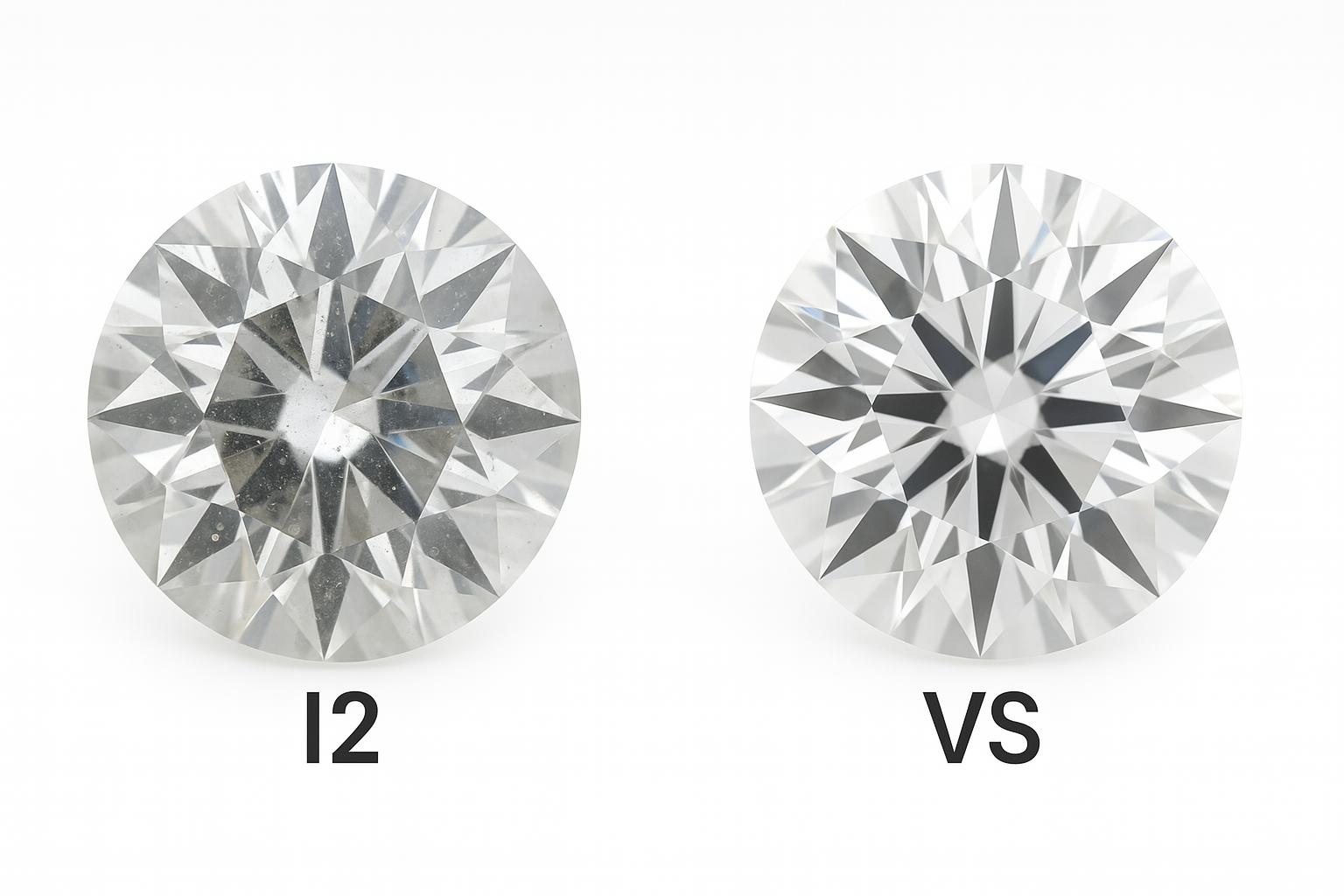
Clarity indicates how many and what kind of internal or external inclusions the stone has. The VS and SI range usually provides an ideal balance, as the price remains reasonable, and inclusions are not visible to the naked eye. It is important to evaluate not only the letter grade but also the location – whether the inclusion is right in the centre or near the edge, where it is easier to hide. An excellent cut often helps to ignite the diamond in such a way that minor inclusions become unnoticeable. Therefore, it is always worth choosing comprehensively, without limiting yourself to one parameter.
Metal and fineness: durability, colour, comfort
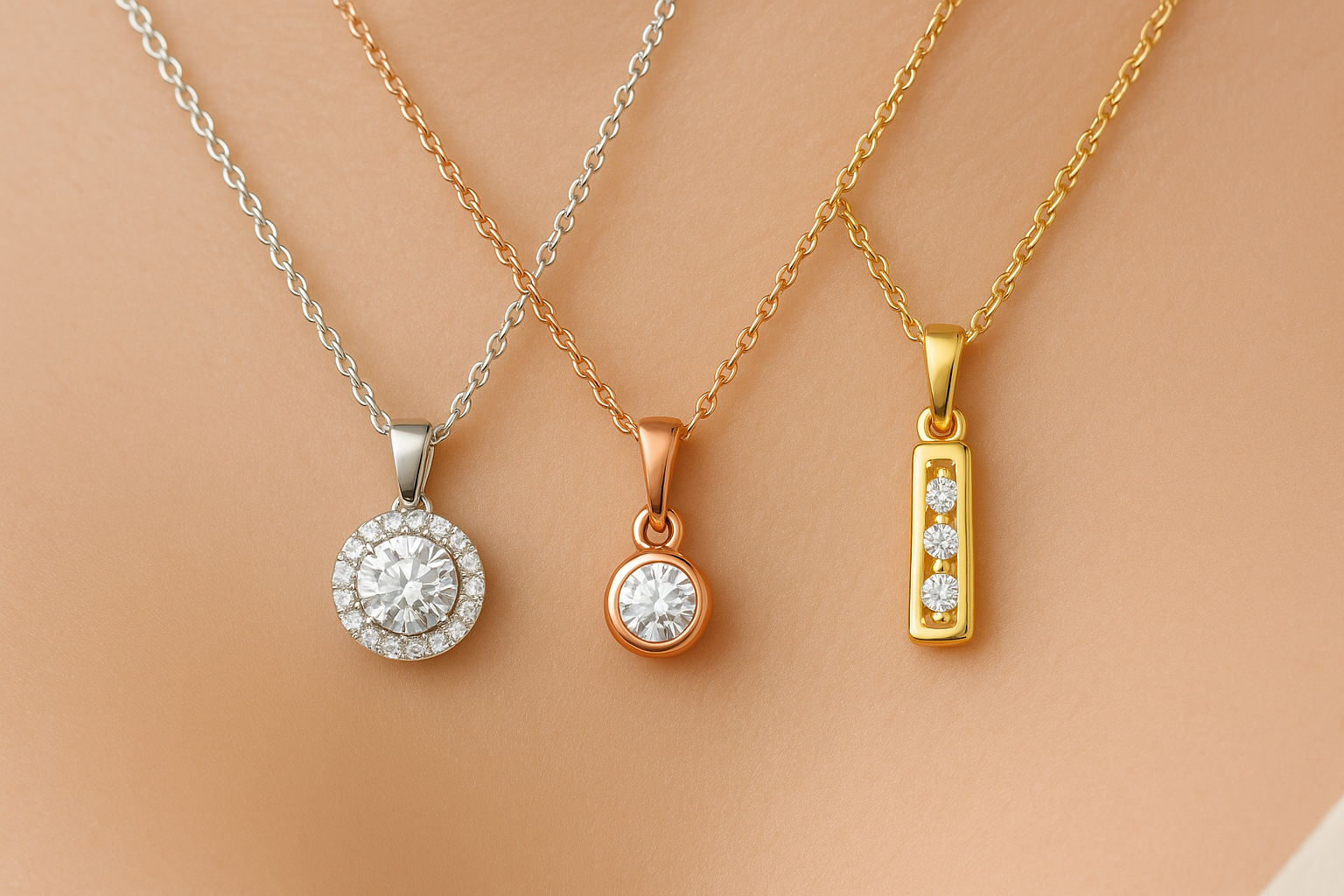
The most popular choices are 585 (14 kt) and 750 (18 kt) fineness gold alloys. 585 is usually more durable for everyday wear, 750 – for richer colour and a sense of luxury. White gold is created in the alloy or with a rhodium plating, so it is worth renewing the surface from time to time. Yellow gold and rose gold do not require such frequent plating, and the colour is provided by the alloy composition. The final decision depends on which hue best matches your skin tone and style.
How to optimise your budget and not lose the effect
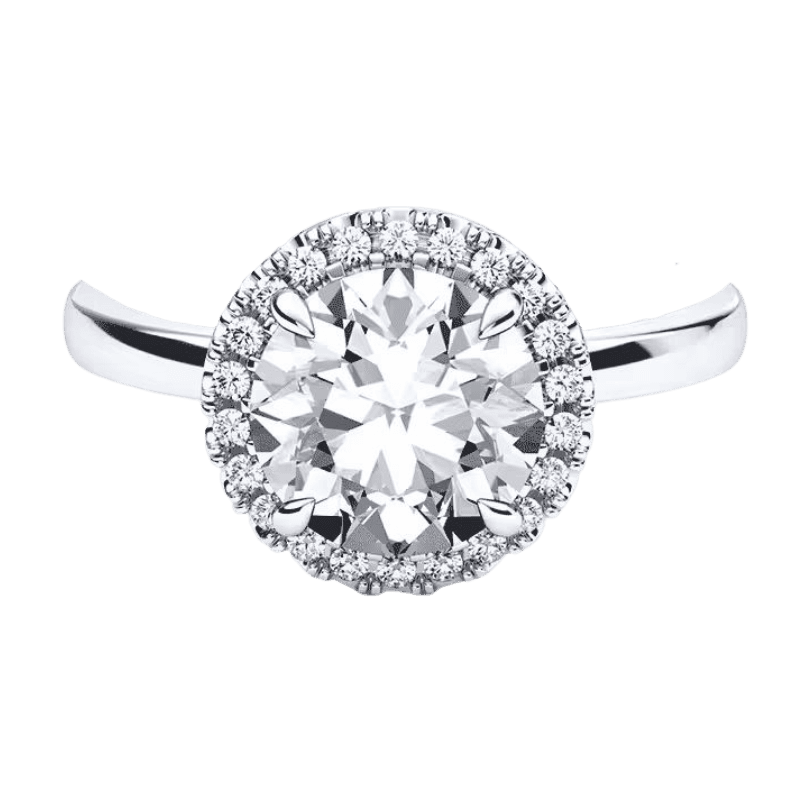
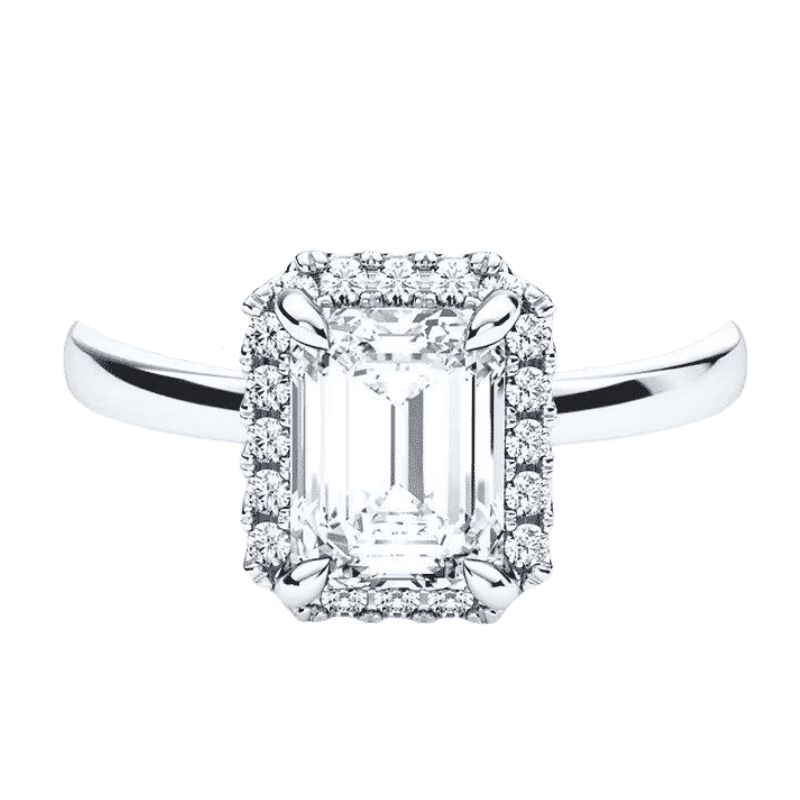
If the budget is limited, first give priority to the cut – it provides the most light. Secondly, consider slightly lower colour and clarity, but visually clean stones. Thirdly, think about a halo design: this way the centre will look bigger, and the diamond price will be more reasonable. Fourthly, review lab-grown diamonds – for the same amount you will get a larger or higher quality diamond. Fifthly, use filtering tools and compare – transparency always helps to make the best decision.
Diamond innovations: cutting-edge technologies and trends
The diamond industry is constantly keeping pace with the latest technologies, making diamonds increasingly accessible and diverse. One of the biggest innovations is lab-grown diamonds, which are visually and in terms of chemical composition indistinguishable from natural ones, but their production is more sustainable and allows for a wider choice at a more accessible price. More and more consumers are choosing diamonds that are certified and have international quality certificates, such as GIA or IGI. This ensures that the quality of the diamonds is confirmed by independent experts, and the investment in a diamond becomes safer. In addition, modern platforms allow you to choose diamonds according to the desired parameters, compare prices, and see real images, making the decision transparent and justified. Diamonds are not only an object of beauty but also of investment, so it is important to understand the subtleties of clarity, weight, and shape in order to be able to choose a stone that will meet your expectations and budget.
The future of the diamond industry: what to expect tomorrow
The diamond industry is constantly changing, so it is important to know what trends await in the future. Consumers are increasingly choosing lab-grown diamonds, which are certified and meet the highest quality standards. This makes it possible to offer a wider choice and ensure that every diamond is checked according to strict criteria. In the future, the diamond price may fluctuate due to various factors – from the availability of raw materials to technological innovations, so it is important to follow market changes and consult with reliable jewellers. Diamonds are not only a jewellery piece but also a valuable investment, so they still remain a symbol of luxury and exclusivity. When choosing diamonds, it is important to pay attention to certificates, quality indicators, and choose those stones that meet your needs and expectations. This way you will ensure that your choice will be not only beautiful but also long-lasting.
Diamonds and brilliant-cut diamonds – the light of your story
Whether you are creating an engagement ring, a minimalist pendant, or everyday earrings, the most important thing is to clearly understand what you expect from a diamond. Diamonds are not only beautiful but also technical; we evaluate brilliant-cut diamonds according to the 4C, certificates, and personal taste. Choose whether you are more fascinated by a classic ring with a diamond, a modern halo, or bright pavé solutions. Then use a transparent filtering system and match all the parameters down to the smallest detail. This way you will turn a diamond into a brilliant-cut diamond, and an idea into a jewellery piece that becomes a symbol of your life. Right?